
The next morning as my porridge boiled away on my stove, I typed a text to Brett.
Thanks for last night. I really hope you keep sharing your music. Don’t be a stranger!
A missed call was waiting when I returned from the showers. My heart leapt into a frenzy as I called him back. No answer. He was probably on the road already with the day’s tour group by now, I thought.

From Jabiru, I headed to Bowali Visitor Centre, and then onto the Burrungkuy rock art site. In the car park a window of reception delivered a text. My heart leapt with anticipation.
‘Hey, I was just ringing to let you know my mate John is giving tours at Burrungkuy today if you wanted to join. It was nice to meet you!’
The last line dealt another blow of finality.
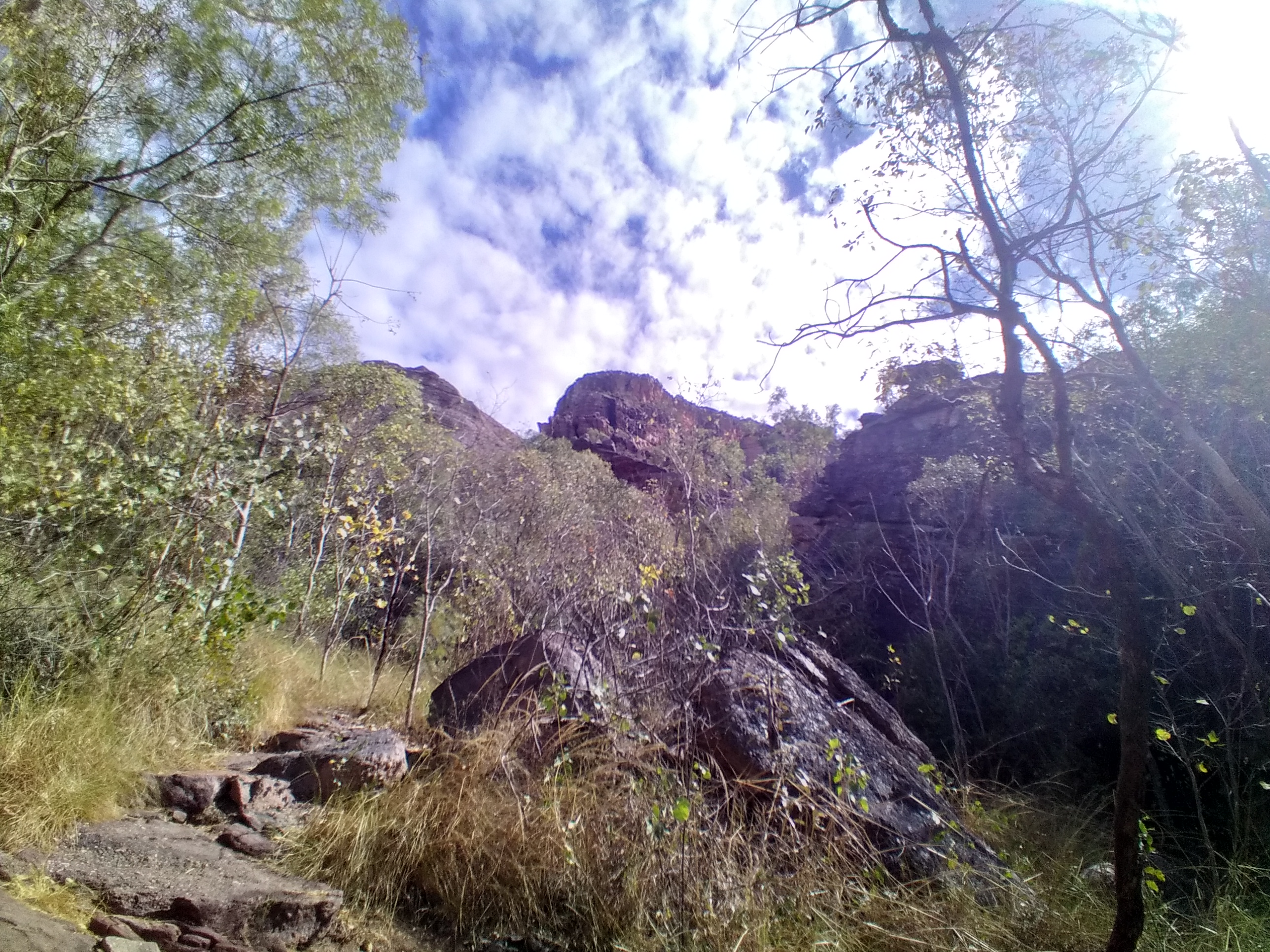
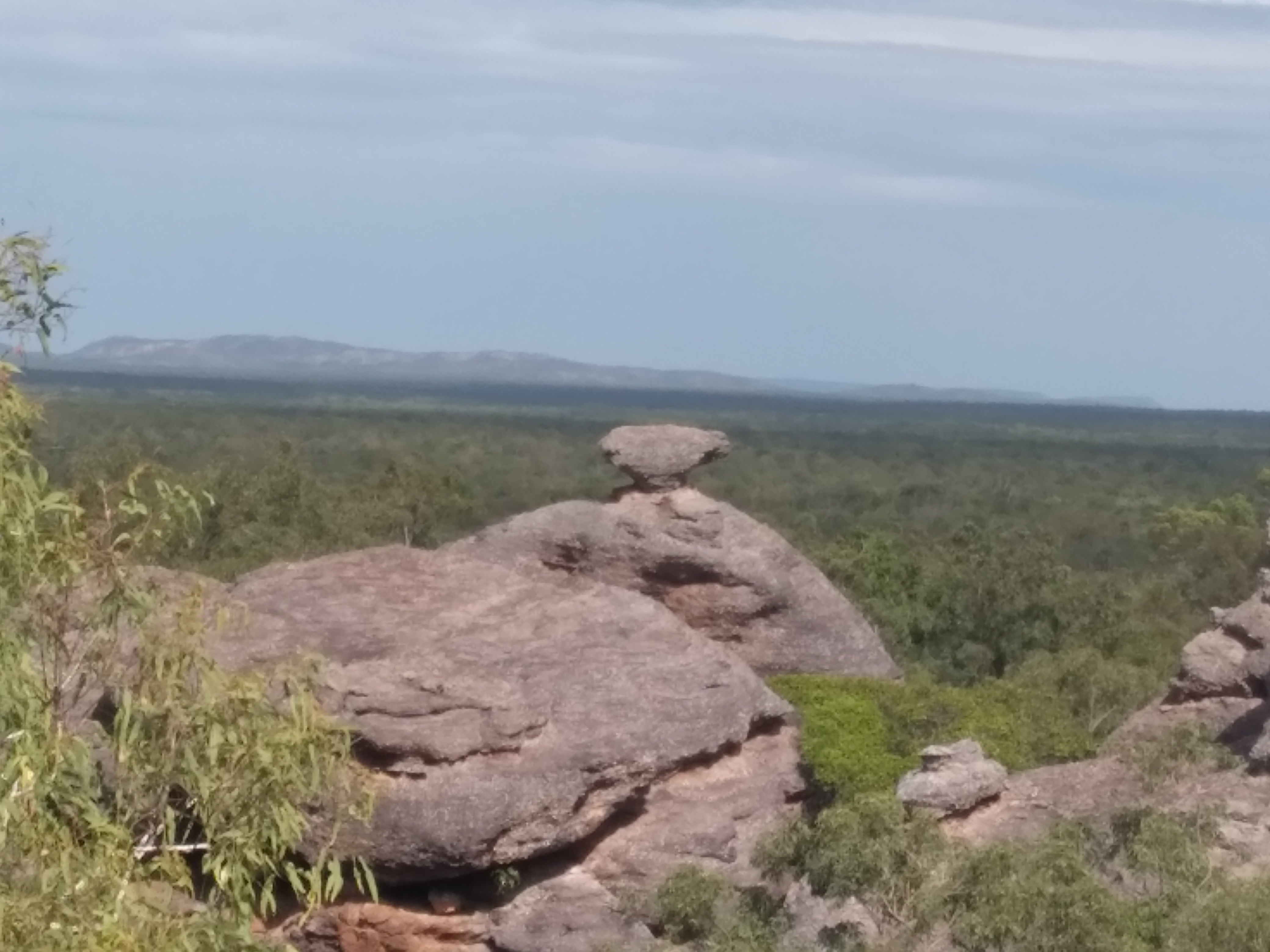
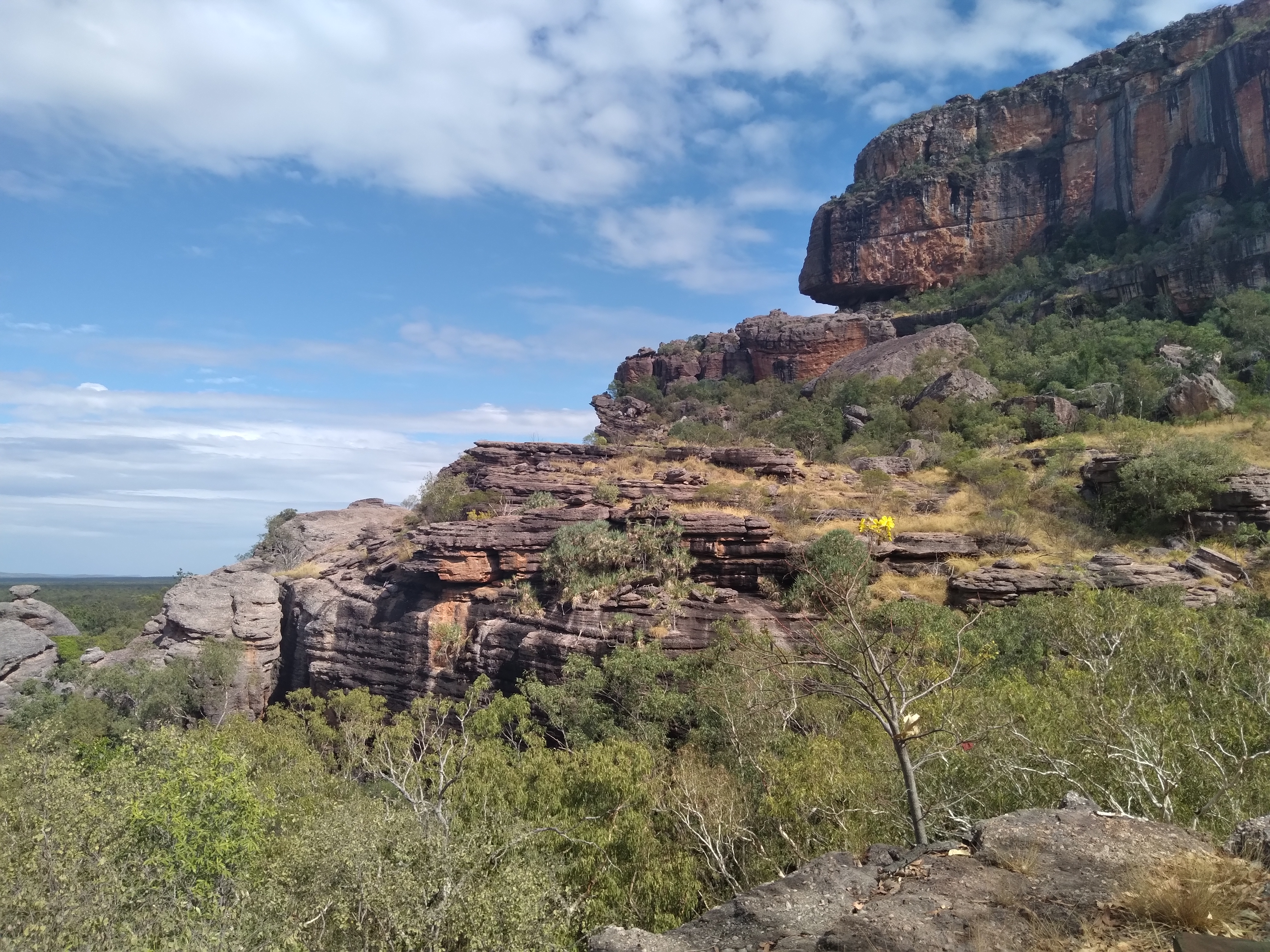
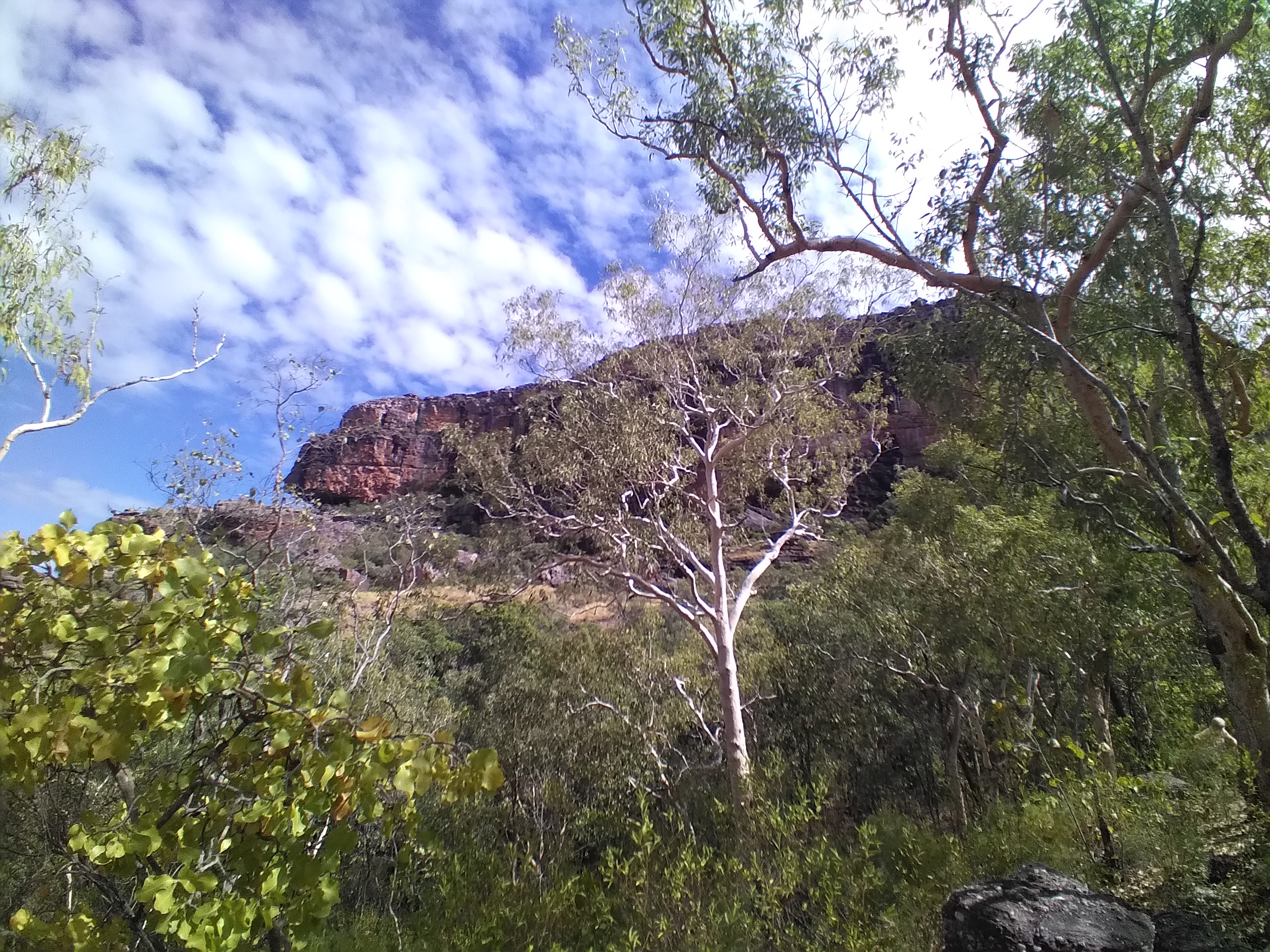
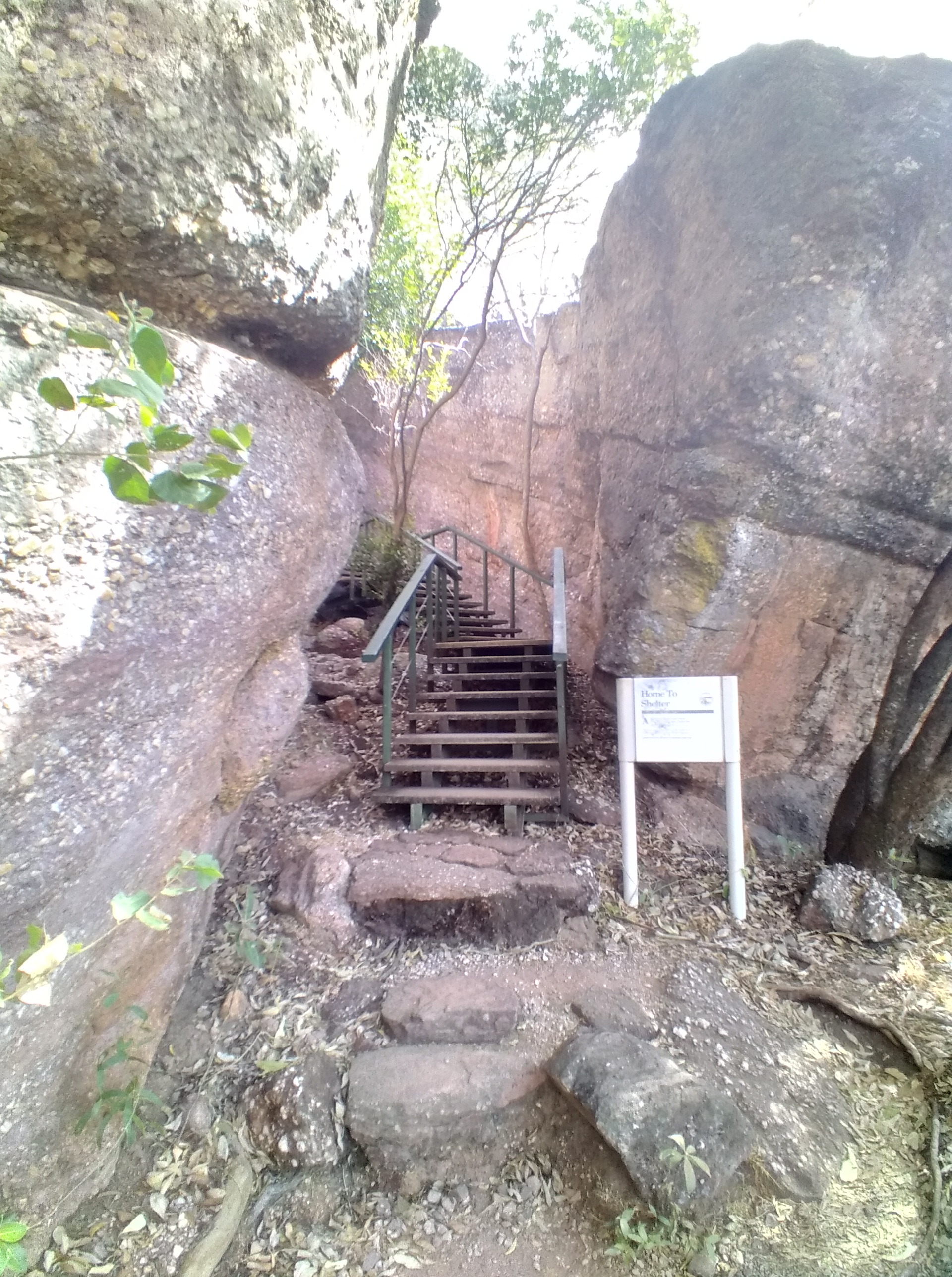
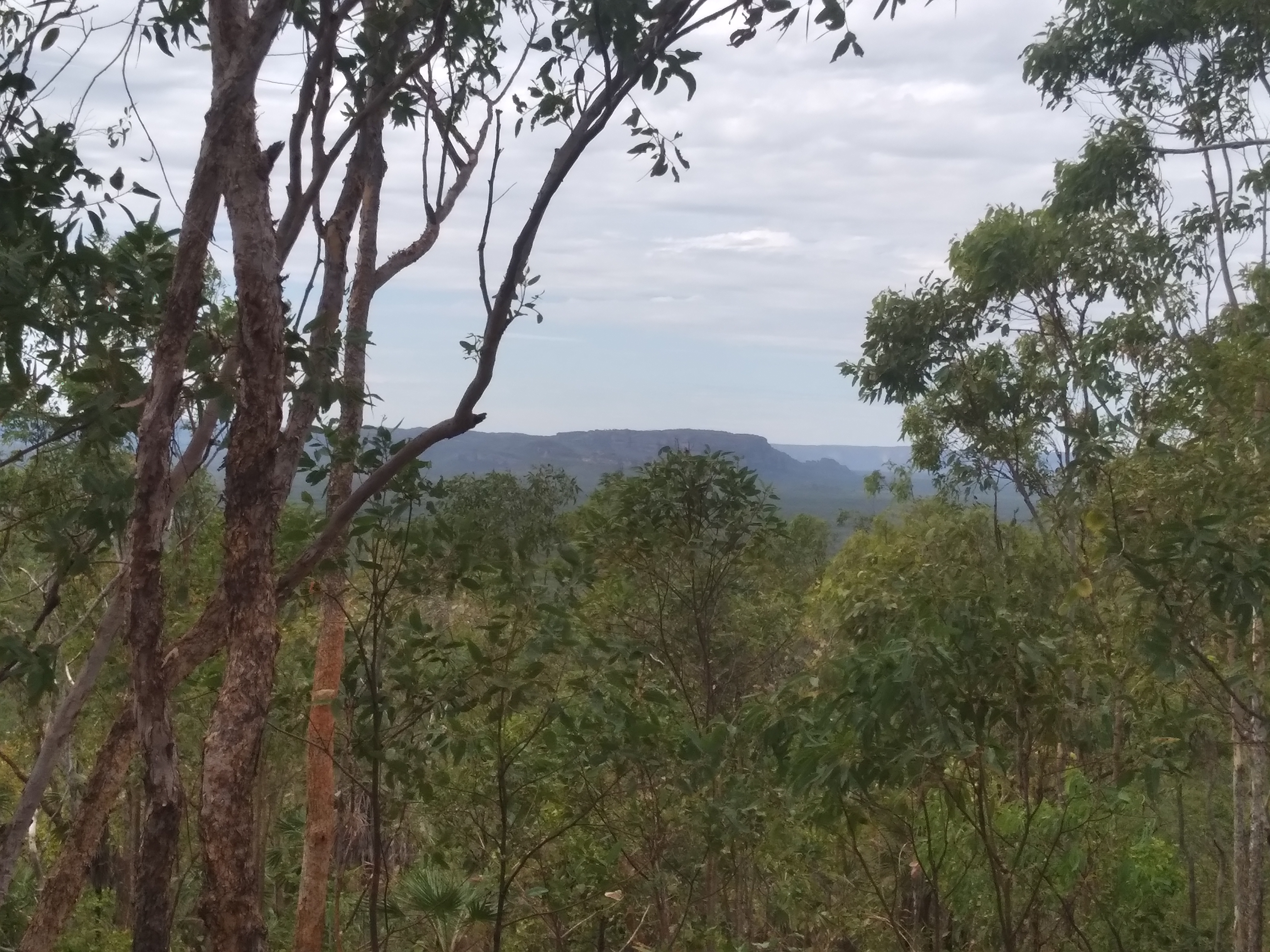
The Burrungkuy walk offered amazing views of World Heritage–listed rock art that represented the Aboriginal Dreaming. From the lookout , I gazed upon the Arnhem Escarpment and the Three Pillars, which is said to be a dangerous and sacred place, a djagandjamun site. Buladjang, ‘sickness country’.


Back at the car park, I typed a reply to Brett.
‘I really enjoyed Burrungkuy! Thanks for the recommendation!’
No response.


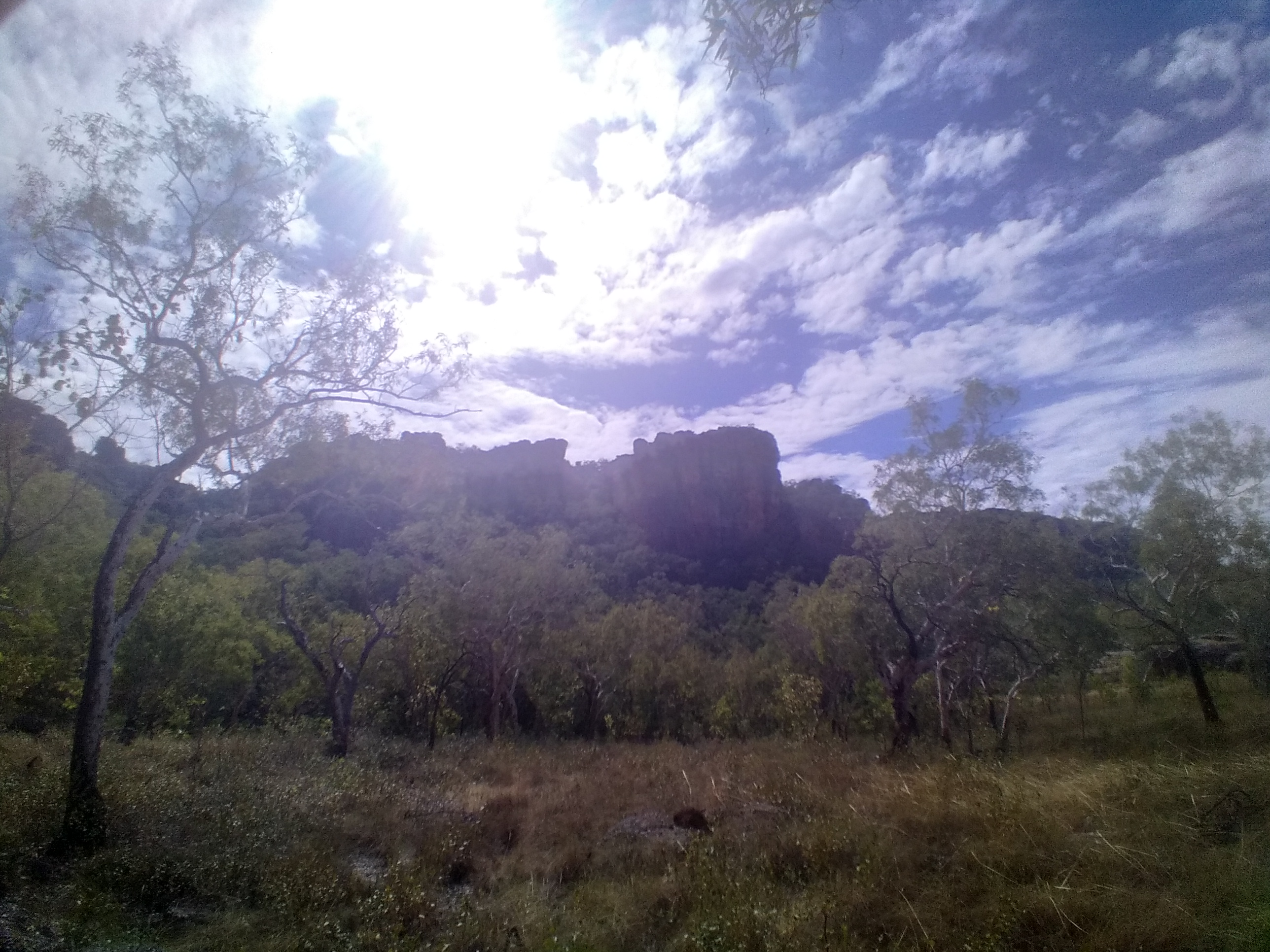


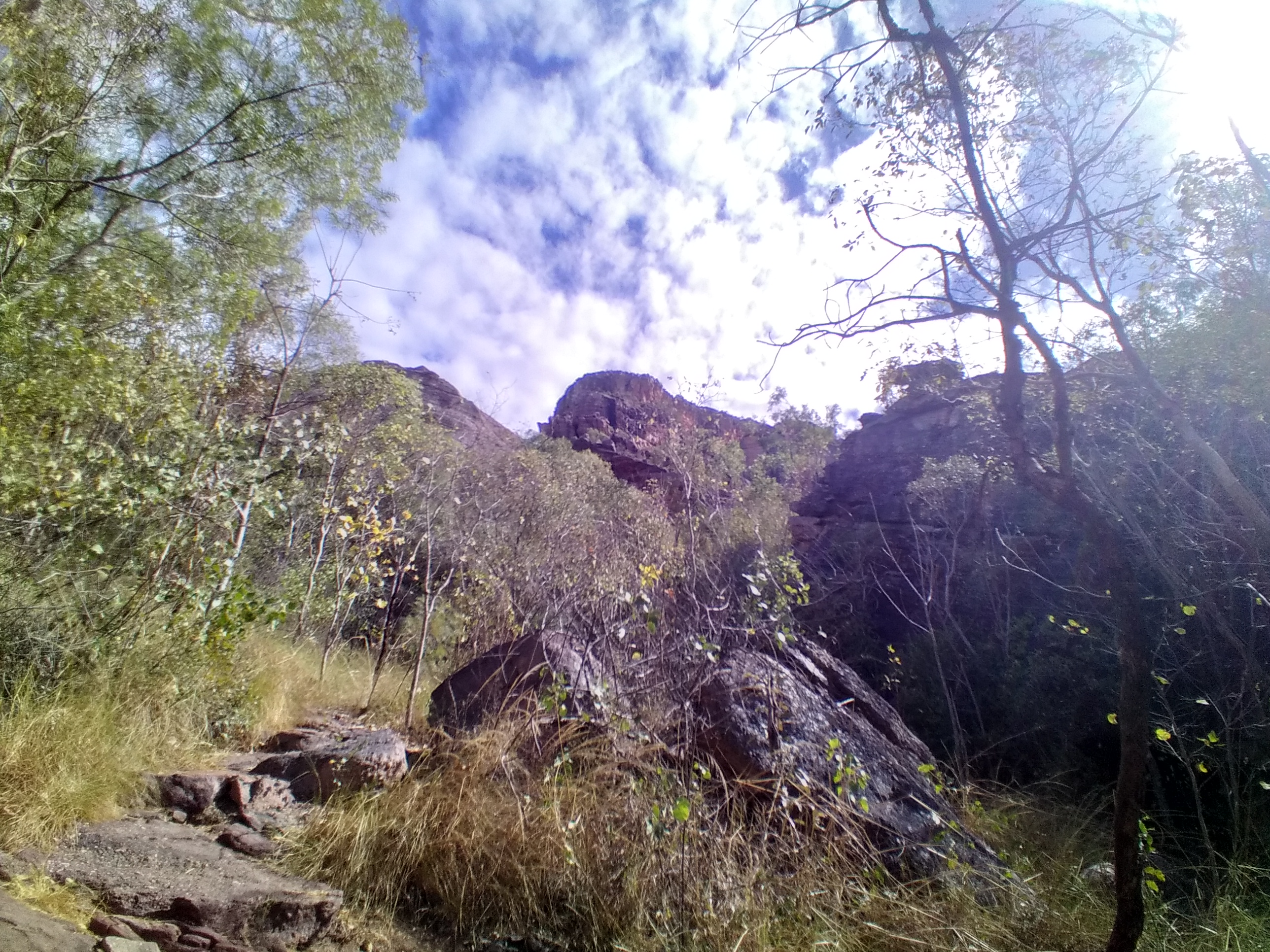
I decided to stop at Mirray Lookout after all; it was only a short, albeit steep, climb.
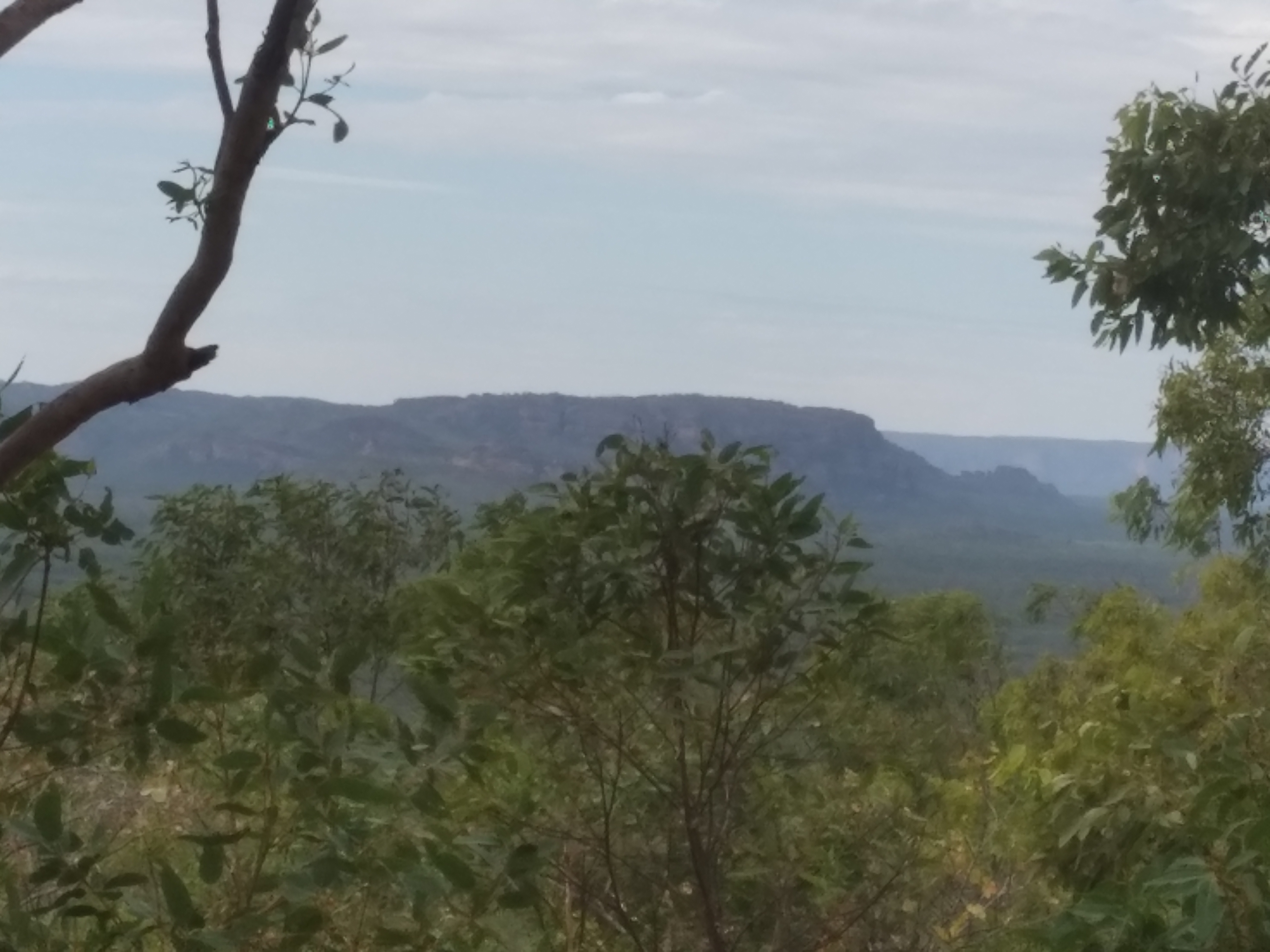


From the Burrungkuy walking track, I continued to the Warradjan Cultural Centre, and onto the Ngurrungurrudjba (Yellow Water) Campground & Caravan Park beside Cooinda Lodge. There, I found a quiet corner of the grounds for the van.

I then caught a shuttle bus to the Yellow Water Cruises terminal. Guests were directed by staff, evenly distributed across a fleet of long, open–air motorboats. I took a seat toward the back of my designated boat, a ‘window seat’ with no window.

The fleet puttered out onto the Yellow Water Billabong, separating and dispersing along the tributaries of the South Alligator River. Commentating through a microphone headset, the tour guide skilfully navigated our boat. She edged as close as possible to the banks of the billabong, giving us a closer look.

A flock of wandering whistling ducks gathered on the shore. These ducks live around deep vegetated billabongs, swamps and flooded plains. It draws its name from its loud whistling call and the noise its wings make during flight.
A crocodile lay in the mud barely a metre from where the flock of ducks were gathered. Our guide informed us that these ducks were not on the menu for crocs- they were too gamey- and so they co-habitated the banks of the billabong in peace.
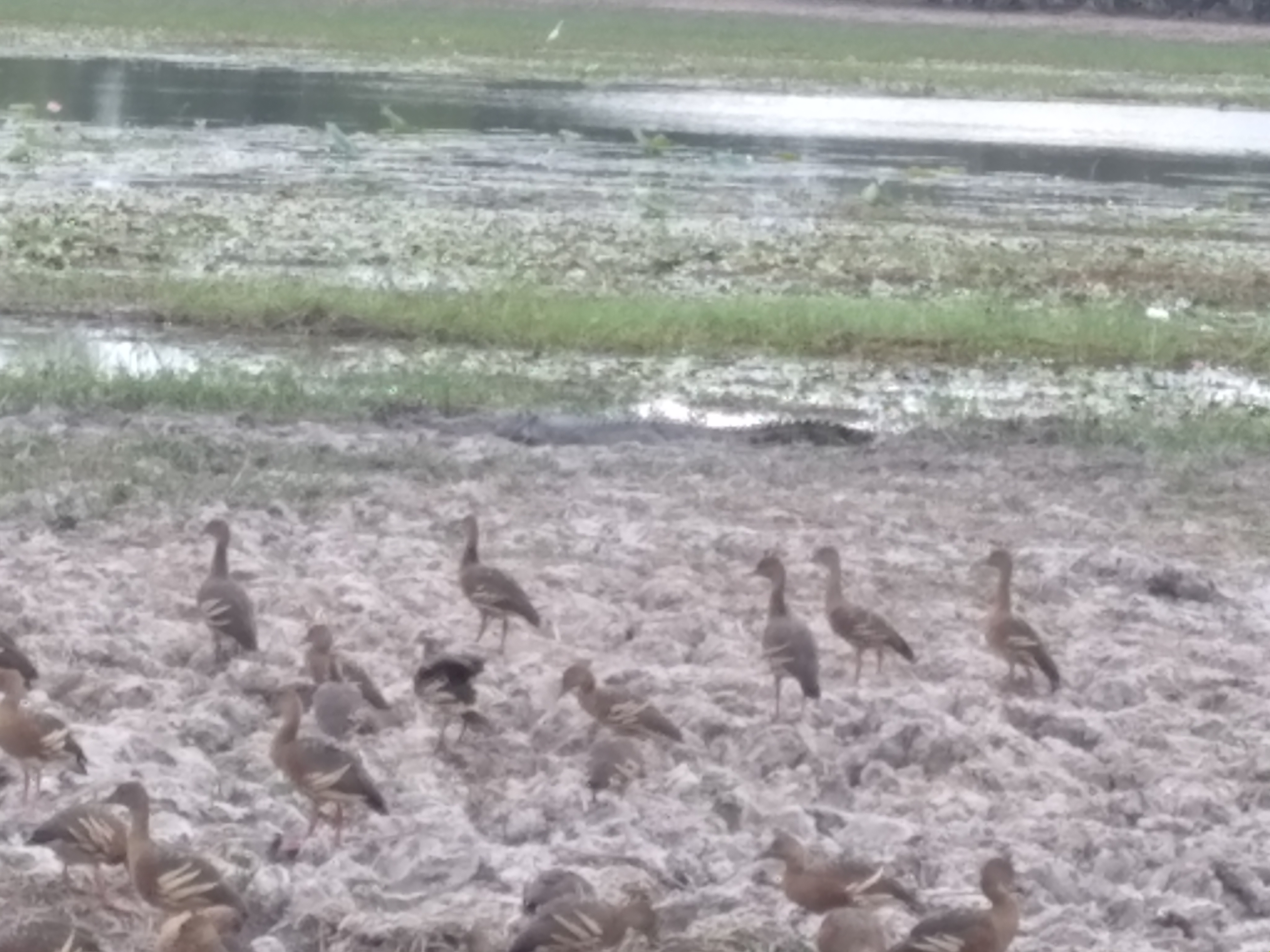
Djirrbiyuk is an Aboriginal outstation in Kakadu National Park named after the nearby sacred site for the wandering whistle duck. The full name of this place is Djirrbiyuk Kakukdjabdjabdi, which means ‘whistle ducks are standing up everywhere’.
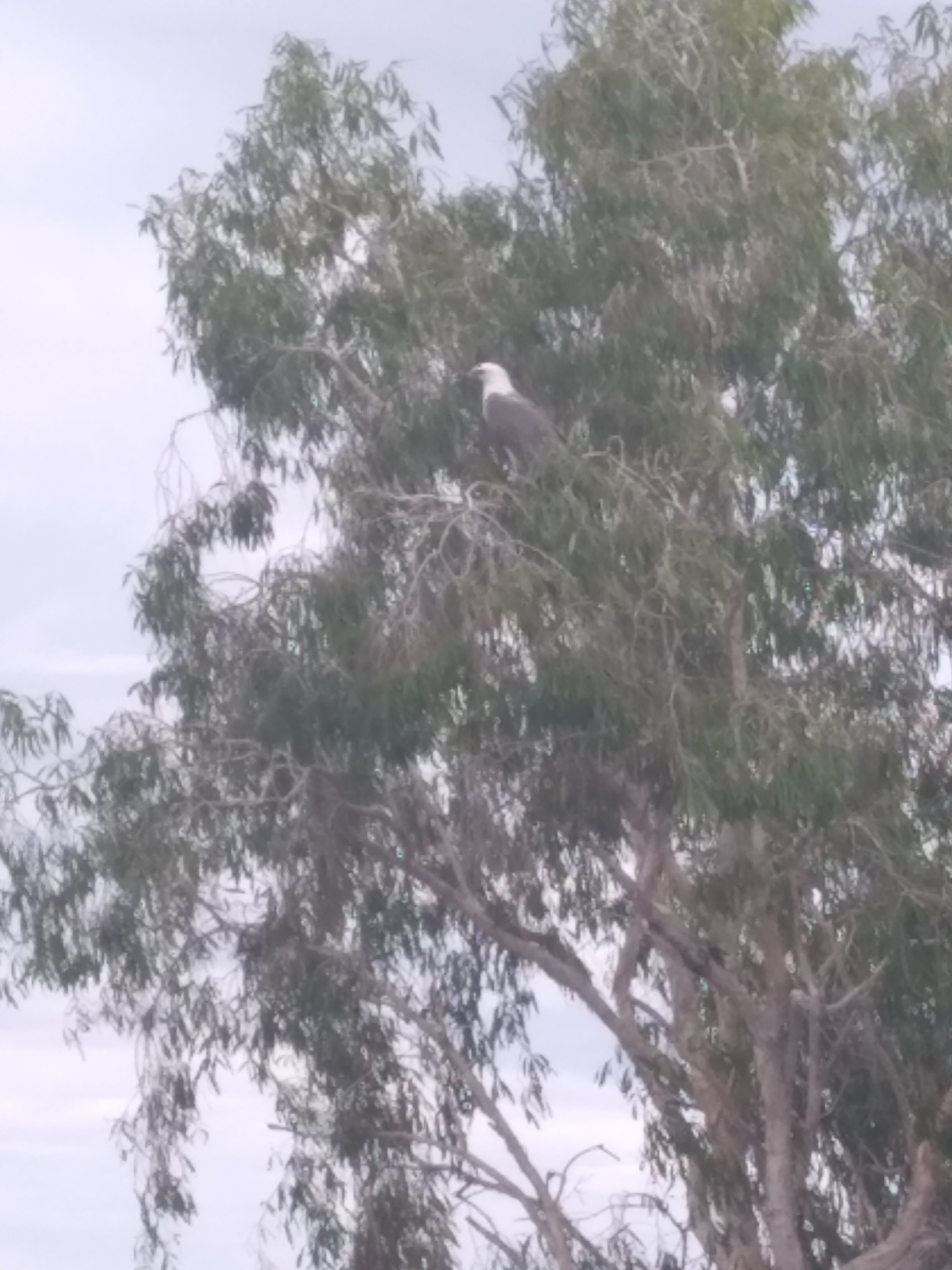
Our guide pulled up alongside crocodiles submerged in the shallows. We spotted a white–bellied sea eagle perched in a tree branch overhanging the water. A dangerous position, according to out guide. She shared that she had seen a crocodile jump out of the water and snap up an eagle straight out of a tree.
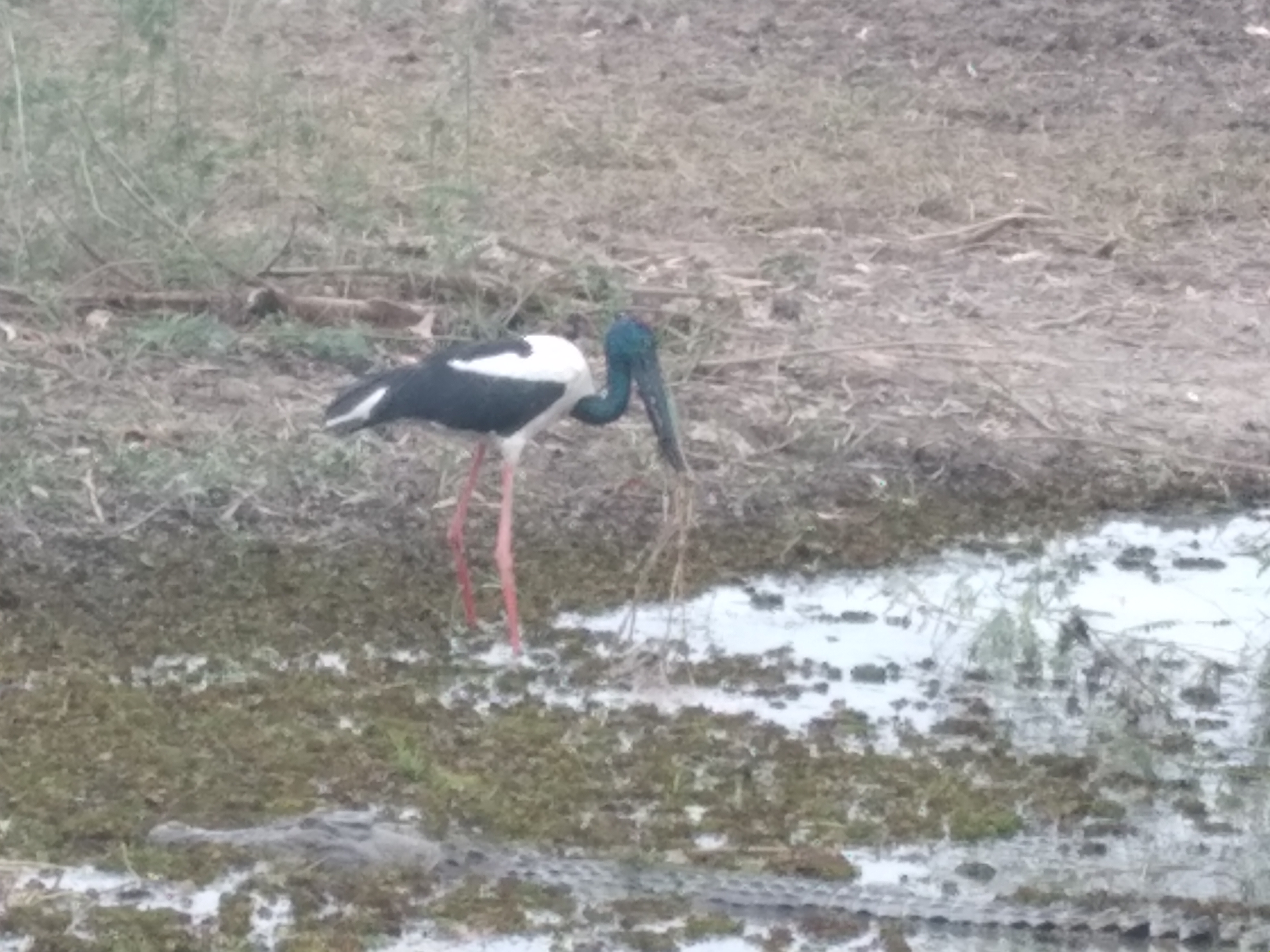
A jabiru casually strutted around a crocodile laid out on the bank of the billabong– it also wasn’t on the menu for the crocs, as it was too lanky, and therefore too chewy.

The whistling ducks were also safe. The water buffalo definitely had nothing to worry about– a croc had no chance trying to drag them into the water.

There was an unspoken understanding amongst the wildlife of Kakadu. An animal’s position on the food chain was reflected by its confidence around the water’s edge. We spotted an Indian night heron with its feet submerged in the water, so obviously it was not to the croc’s taste either.
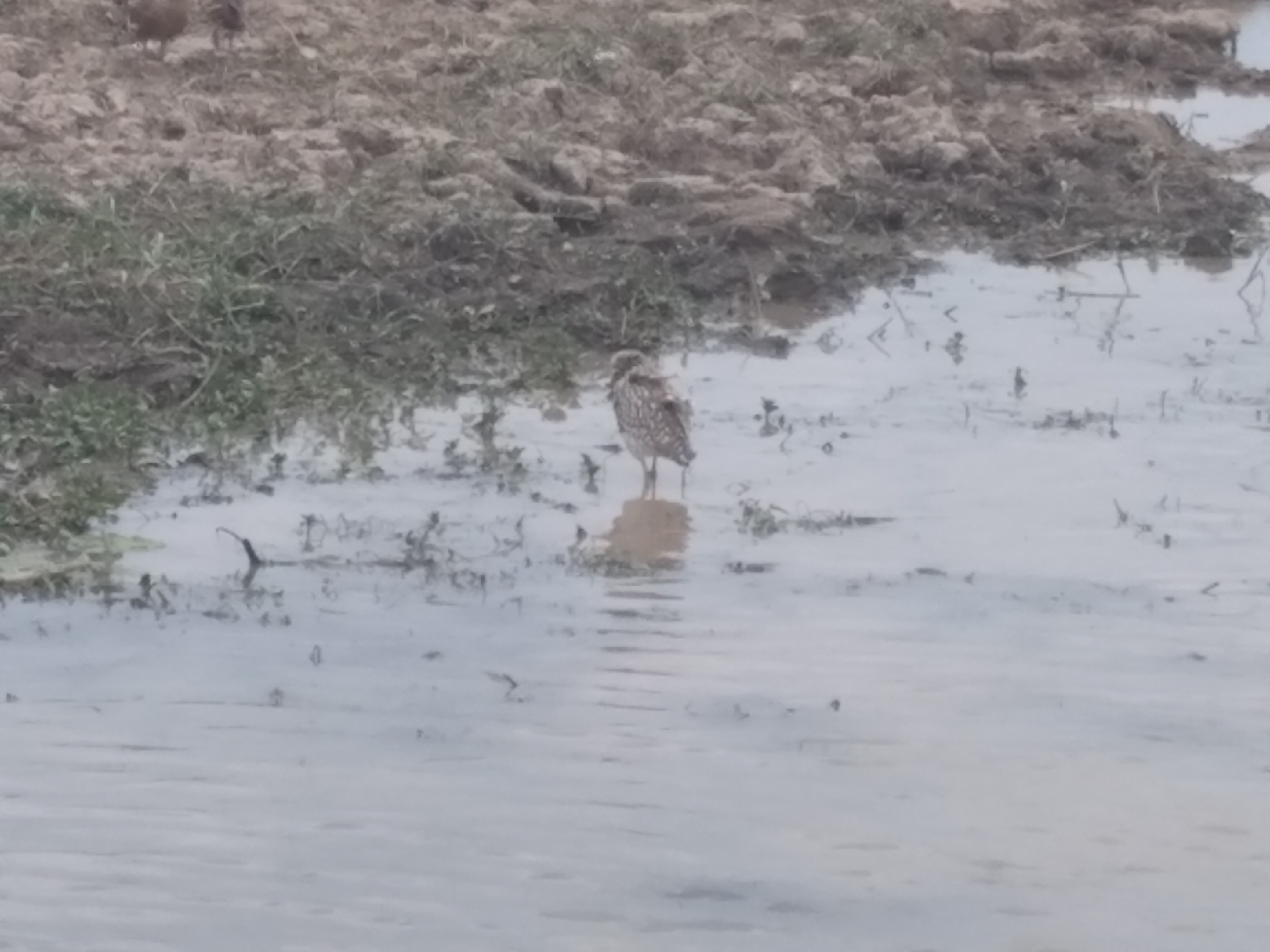
Waterlilies grow around the edges of Kakadu’s freshwater billabongs. Their leaves could be seen turned in the direction of the sun.
Also known as the lotus flower, this pretty aquatic herb lives in water that is several metres deep. The waterlily has one large green leaf that floats on top of the water. Throughout most of the year it shows off a large pink-and-yellow flower with an absolutely divine smell. Yellow Water Billabong and the Kungardun walk are two of the best places to see waterlilies in Kakadu.
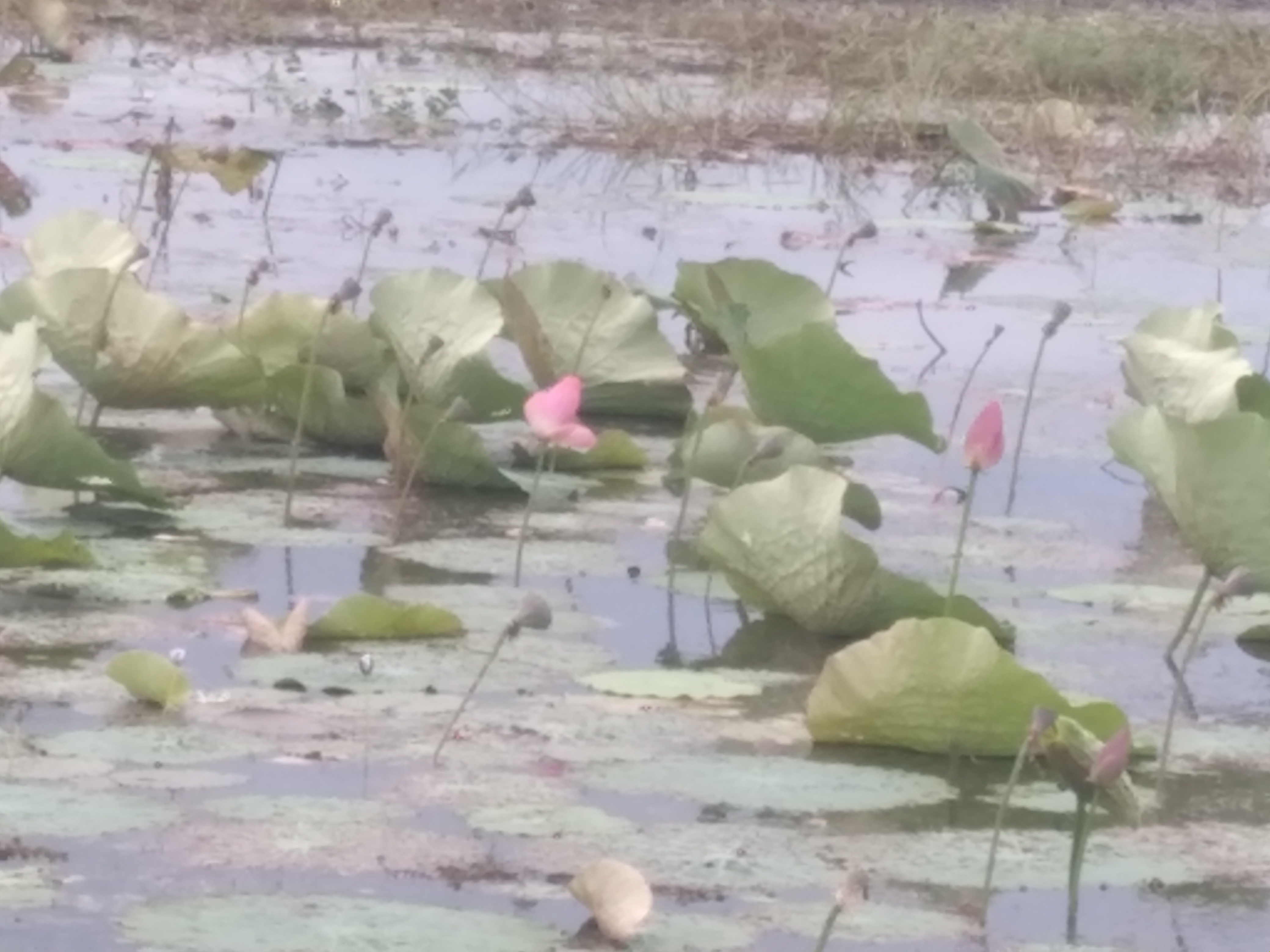
Waterlilies are an important food source for Bininj/Mungguy. The root tubers and seeds are eaten raw or cooked and can be pounded into a flour to make bush bread.
There was no phone reception at Cooinda Lodge. After returning from the cruise, I walked through pitch black darkness along the road leading in and out of the resort, in an effort to find a signal. I needed to access my internet banking to transfer money for a Zip Pay payment. I tried for a few minutes but could not find a signal, so I returned to my van. I heated up dinner and had a shower.
Walking back from the amenities block, I froze, patting down my dirty clothes and pockets.
I had lost my car keys.
I discovered I had accidentally left the back hatch door of the van unlocked, so I wasn’t completely shut out of the van, but I wouldn’t be able to drive it in the morning. My panic escalated as I retraced my steps through the camp kitchen and amenities block. I was so annoyed with myself: I had been so careful keeping the keys in check through the whole trip. I called the night manager on the phone at reception to see if anything had been handed in.
No luck. My small torch was attached to the keys, so I borrowed one from reception. Looking around the carpark, by a pure stroke of luck I stumbled across the keys lying on the ground. I breathed an audible growl of relief.
It was late in the evening now. I needed to calm down before bed, so I made a cup of tea in the camp kitchen to write in my travel journal about the drama of the night.
The next morning, I packed up my campsite and headed for Maguk Falls (pronounced ma–gook). I hadn’t planned to go there, as the dirt road leading to the falls was accessible only by 4WD. I checked out of Cooinda Lodge, and the receptionist asked if I was going to the falls. She suggested my van would be fine for the drive, as the dirt road to the falls had recently been graded.

Turning off the Kakadu Highway, I noticed another campervan parked on the side of the dirt road leading to the falls. I decided to play it safe and leave my van there too. I walked for about thirty minutes along the dirt road before deciding to turn back and try my luck with the van. I was due back in Darwin that afternoon to return the van to the depot at 3pm, and would potentially lose time by walking to the falls. I took it slow and steady along the road, pulling over for 4WDs to overtake me.

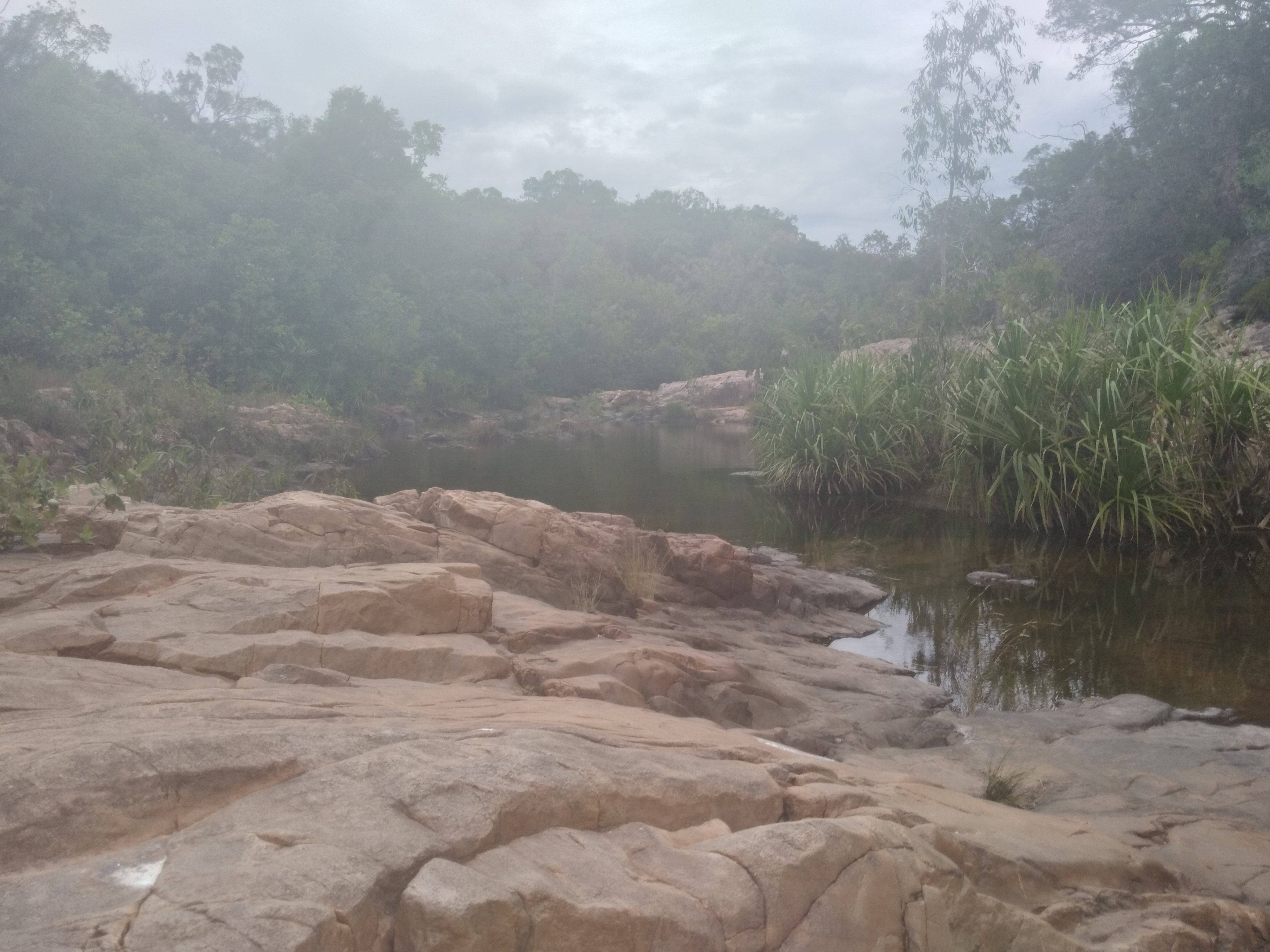
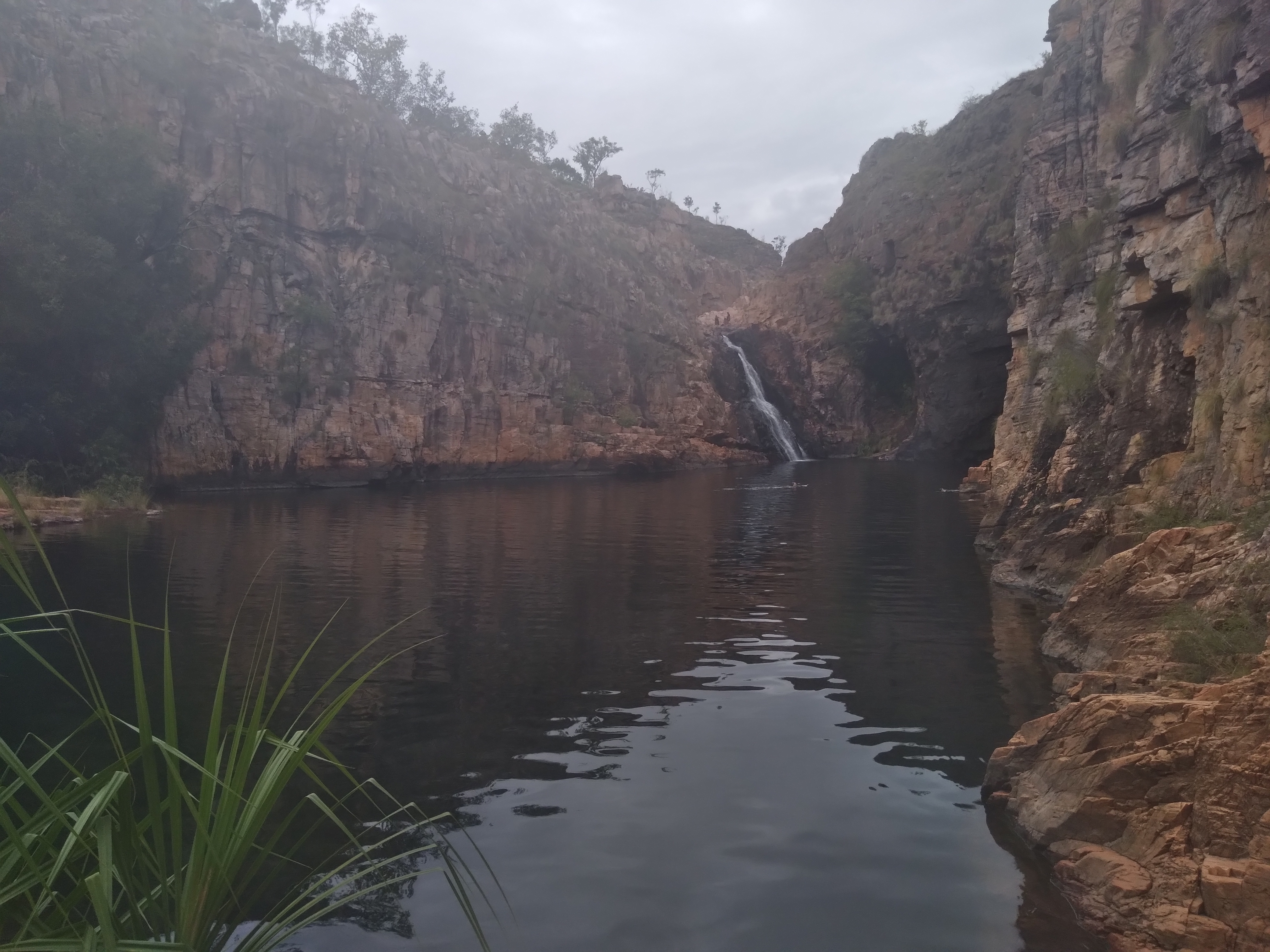
I made it to the carpark and walked the short distance along a rocky dirt path to the falls. There, I submerged myself into the cool waters of the plunge pool, washing off the red dirt from the walking track. I stayed in the shallows– this swimming hole was crocodile–free, but a part of me was not willing to brave the swim across the pool to the falls.

After the swim, I started the long drive back to Darwin via Pine Creek. I didn’t enjoy this journey as much as the drive to Jabiru. This part of Kakadu National Park was dry and dusty, a complete contrast to the lush green savannah I had passed through on my way to Jabiru. I did come across some giant anthills, and couldn’t help but stop and take a picture.
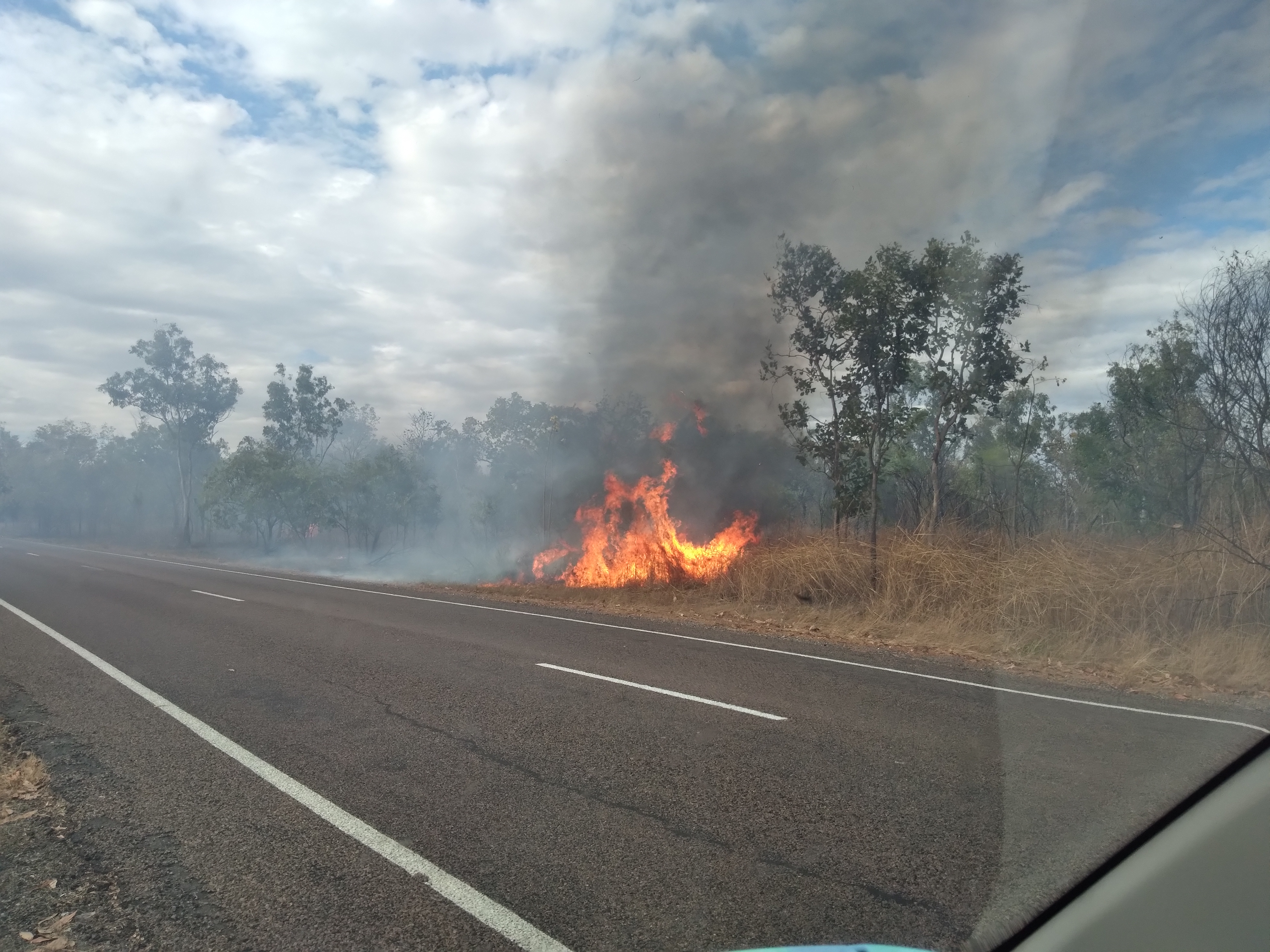
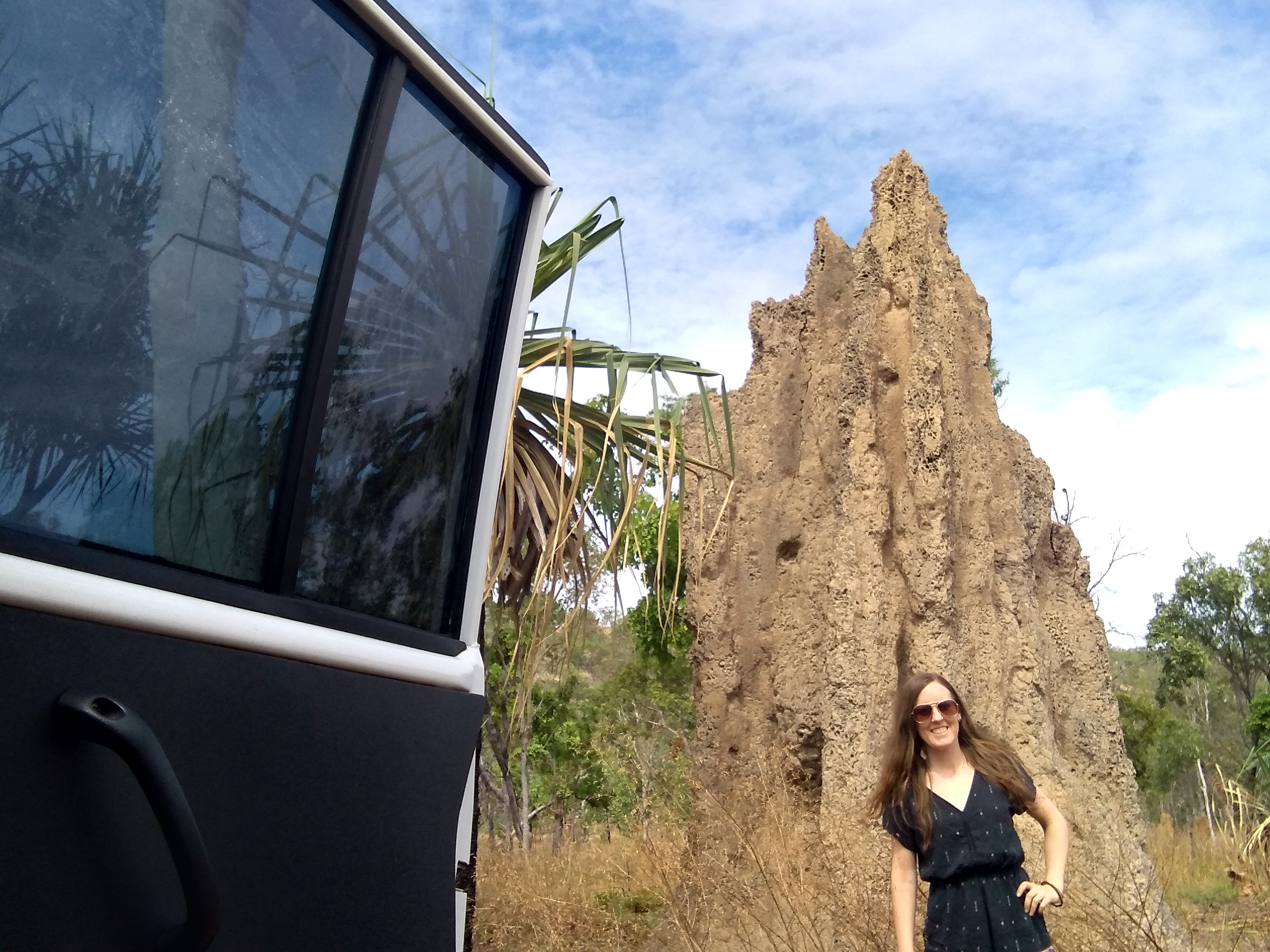
I had lost an hour– I thought it was going to take two and a half hours to get back to Darwin, but in fact it was three and a half. I had planned to stop briefly in Pine Creek and look around the historical township located 90km north of Katherine.
Gold was discovered at Pine Creek in 1871 by construction workers on the Overland Telegraph Line. Many of the original buildings still stand. I did stop, but only long enough to call the campervan company to tell them I would be late dropping the van back to the depot.
Over the four days, I had been reminded of just how capable I was. I could survive driving a beat-up campervan solo through Kakadu National Park with almost non–existent phone reception. If I could do this, I could do anything.
Discover more from Kate Kelsen
Subscribe to get the latest posts sent to your email.

