
After one and a half weeks in my student accommodation room in The Liberties, I packed my bags, checked out of Binary Hub and caught the bus to Trinity College. My stay at Trinity College was intended to be a writing retreat of sorts, and I decided to do the Trinity Trails walking tour and Book of Kells Experience that afternoon so I could concentrate on writing for the next few days.
The Trinity Trails tour began at the Campanile, a clock tower in the heart of Trinity’s Front Square. Our guide was a current student, and extremely knowledgeable of the college’s history. She shared with us the interesting superstition about the structure- legend has it that if a student walks underneath the Campanile as the bell tolls within the tower, they will fail all of their exams.
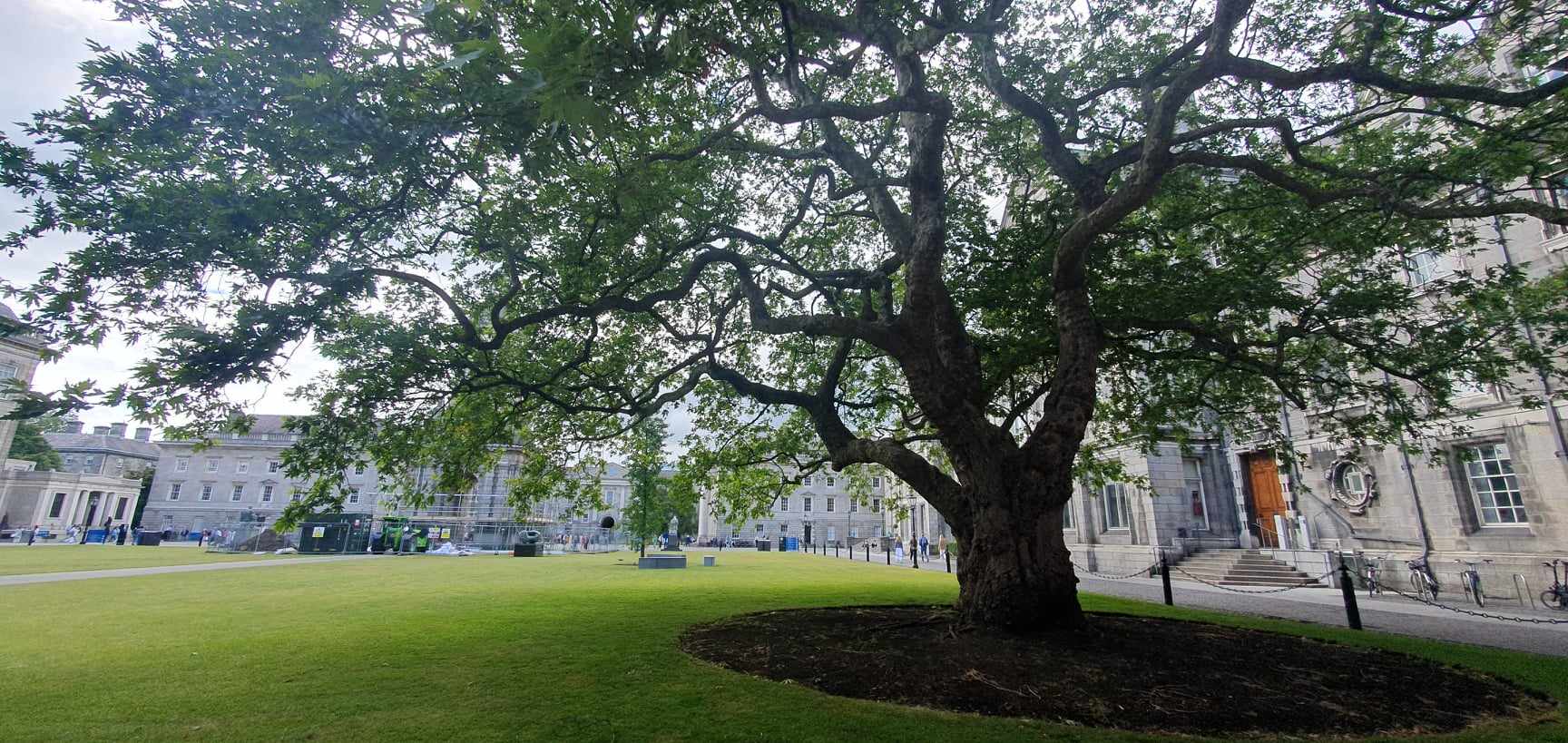

We soaked up Trinity’s tranquil, leafy squares as we meandered along pathways that were once frequented by some of Ireland’s most famous writers, actors and changemakers. We passed by the homes of two of the world’s oldest student societies, with past members such as Oscar Wilde, Samuel Beckett and Mary Robinson. The tour concluded with a seamless transition to the Book of Kells Experience.

Founded in 1592, Trinity College is Ireland’s oldest university and home to the Book of Kells, a 9th century manuscript containing the four Gospels of the New Testament. It was created in a Columban monastery in either Ireland or Scotland circa 800 AD. The manuscript takes its name from the Abbey of Kells, County Meath, which was its home for centuries, and is regarded as a masterwork of Western calligraphy and the pinnacle of Insular illumination.


Book of Kells folios
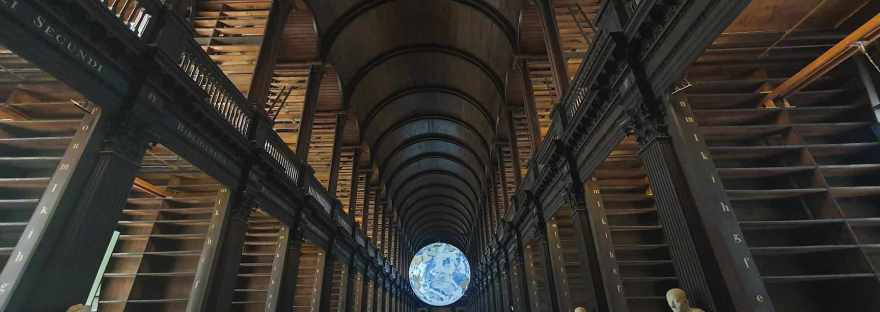
Located in the Old Library, visitors first view the Book before marvelling at the Long Room, considered to be one of the world’s most beautiful libraries.
The Long Room
The main chamber of the Old Library is the Long Room. At nearly 65 metres in length, it is usually home to 200,000 of the Library’s oldest books, although at the time of my visit the majority of books had been removed as part of a landmark conservation project.

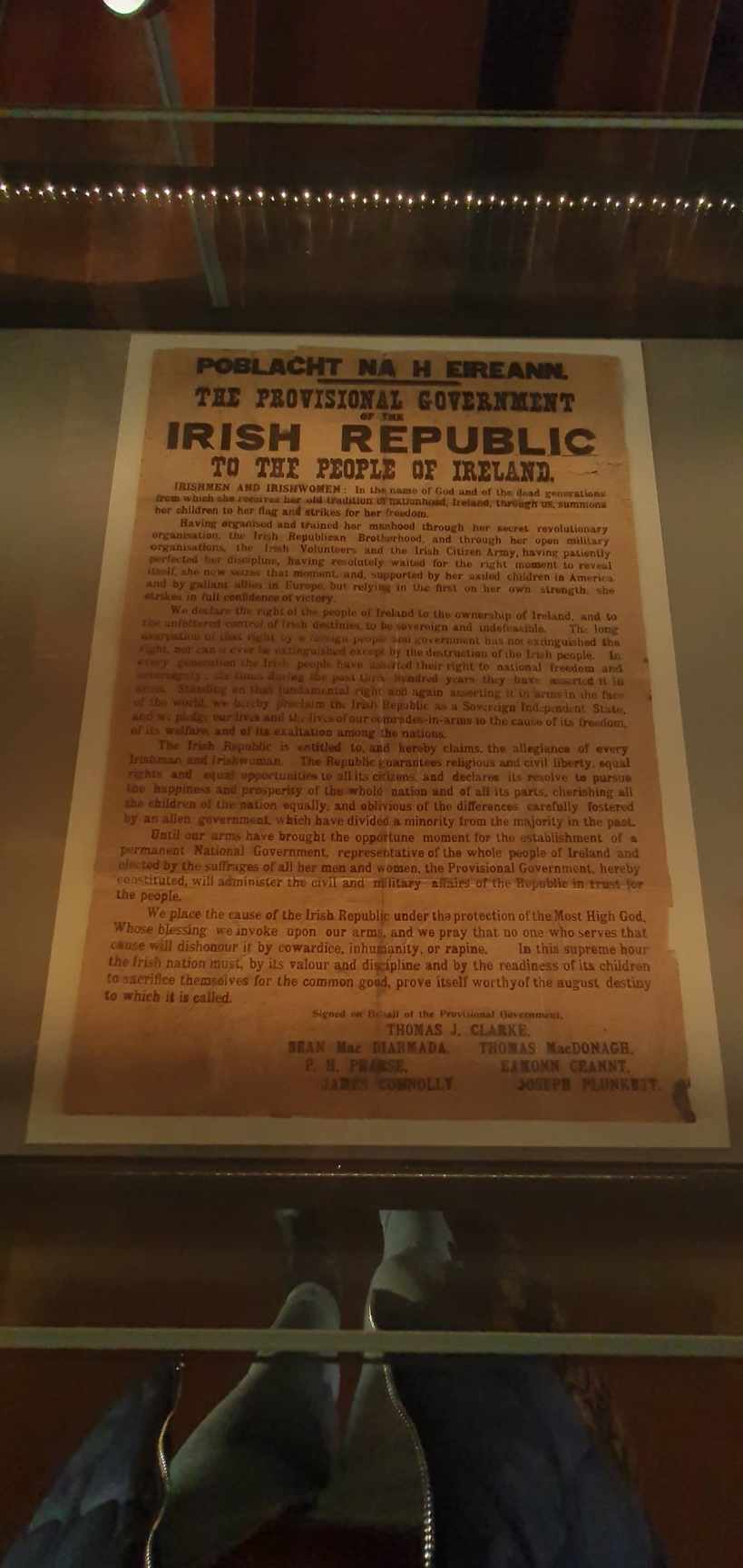
One of the many treasures in the Long Room is one of the few remaining copies of the 1916 Proclamation of the Irish Republic which was read outside the General Post Office on 24 April 1916 by Patrick Pearse at the start of the Easter Rising.
Marble busts line the Long Room, a collection that began in 1743 and was commissioned by sculptor Peter Scheemakers. The busts are of the great philosophers and writers of the Western world and also of those connected with Trinity College Dublin—famous and not so famous. The finest antique bust in the collection is of the writer Jonathan Swift by Louis Francois Roubiliac.


The Long Room is one of the most beautiful libraries in the world, but it also contains ugly reminders of how the patriarchy dominated academics throughout history.
The first busts were displayed in 1743, all of men, from Homer, Aristotle and Plato through to Wolfe Tone and the Duke of Wellington. It would take 280 years, but four busts representing women have now been included, the first new statues in the university for more than a century.
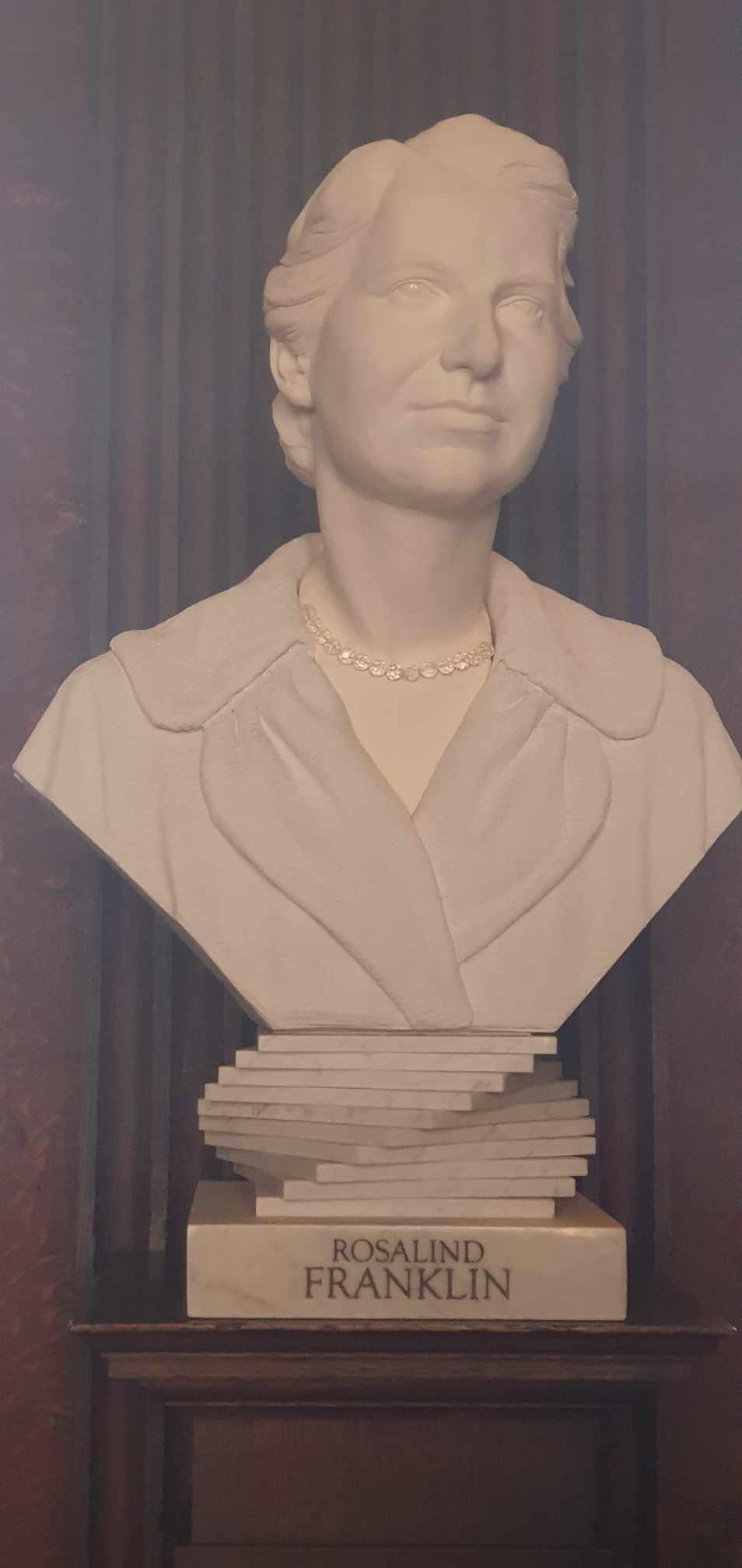


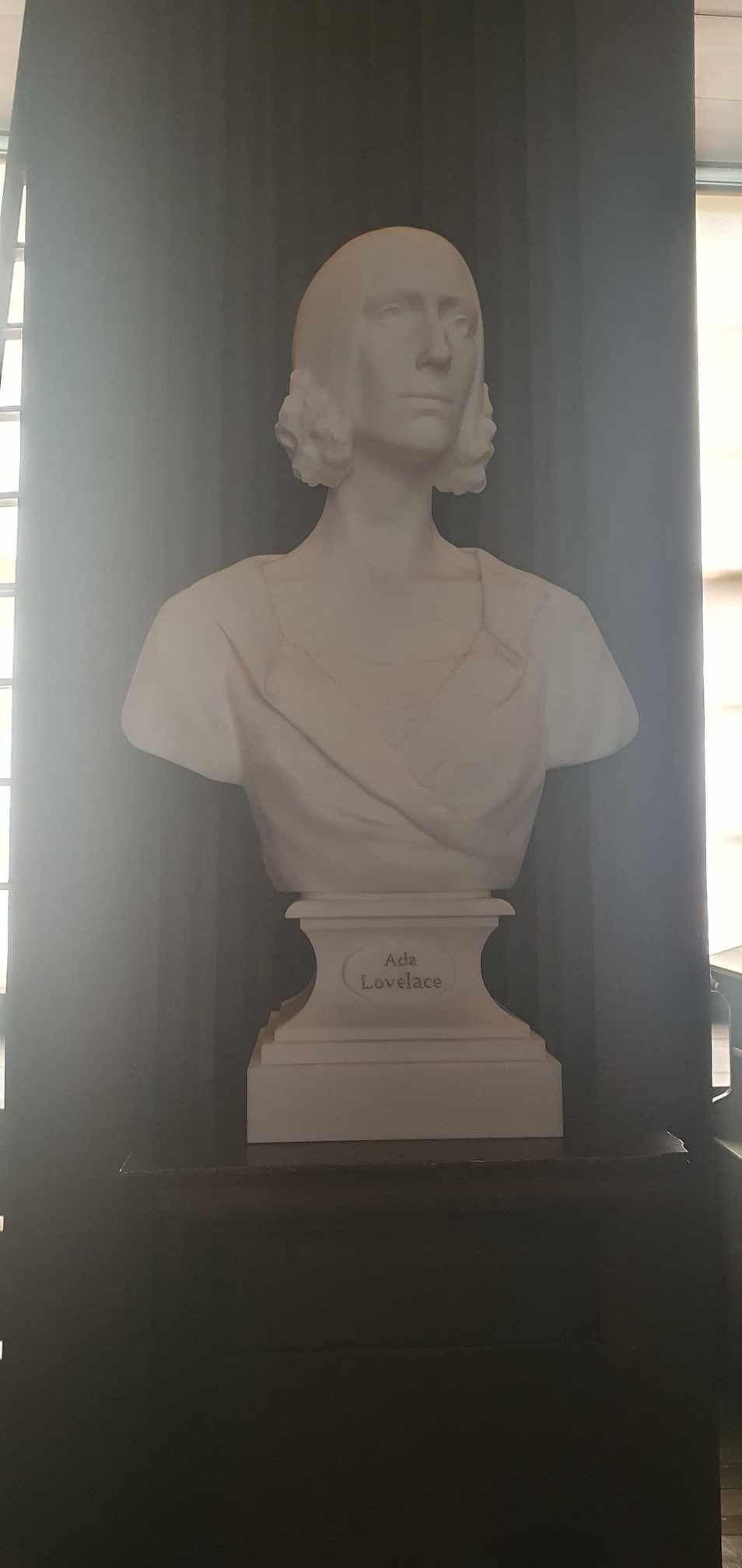
The statues were unveiled on St Brigid’s Day by Trinity’s first female librarian Helen Shenton, its first female Provost Professor Linda Doyle and by the former President of Ireland and Trinity chancellor Mary McAleese. The most famous of the four chosen was Lady Augusta Gregory, one of the creative powerhouses behind the Irish literary revival and a champion of WB Yeats.
The others include Augusta Ada King, Countess of Lovelace, who helped design the first analytical engine (general-purpose computer) in 1843. Another new arrival is Mary Wollstonecraft, whose book A Vindication of the Rights of Women, published in 1792, was considered a foundational text for women’s rights movements worldwide.
The world of science is represented by Rosalind Franklin, and her work on both the structure of DNA and RNA. Rosalind died tragically from cancer aged 37.
The other artists are Guy Reid (Augusta Gregory), Maudie Brady (Ada Lovelace) and Rowan Gillespie (Mary Wollstonecraft).
There is also a medieval harp on display known as the Brian Boru harp. The harp is the oldest of its kind in Ireland; it has incorrectly become associated with the great Irish king Brian Boru (died 1014). Although its early history is uncertain, it is said to be dated from the 15th century. It is made of oak and willow with 29 brass strings, and is the model for the emblem of Ireland.

Above it all hangs Gaia, the spectacular illuminated artwork by Luke Jerram. Gaia features 120dpi detailed NASA imagery of the Earth’s surface, showcasing the planet floating in three dimensions as it might be viewed from space. The majority of the books in the Long Room have been removed as part of a landmark conservation project.
In the Red Pavillion, stories, the bust sculptures of Ada Lovelace, Jonathan Swift and Rosalind Franklin came to life before my very eyes as digital projections. The Book of Kells 360 was a spectacular journey in light and sound of the ancient masterpiece’s history.

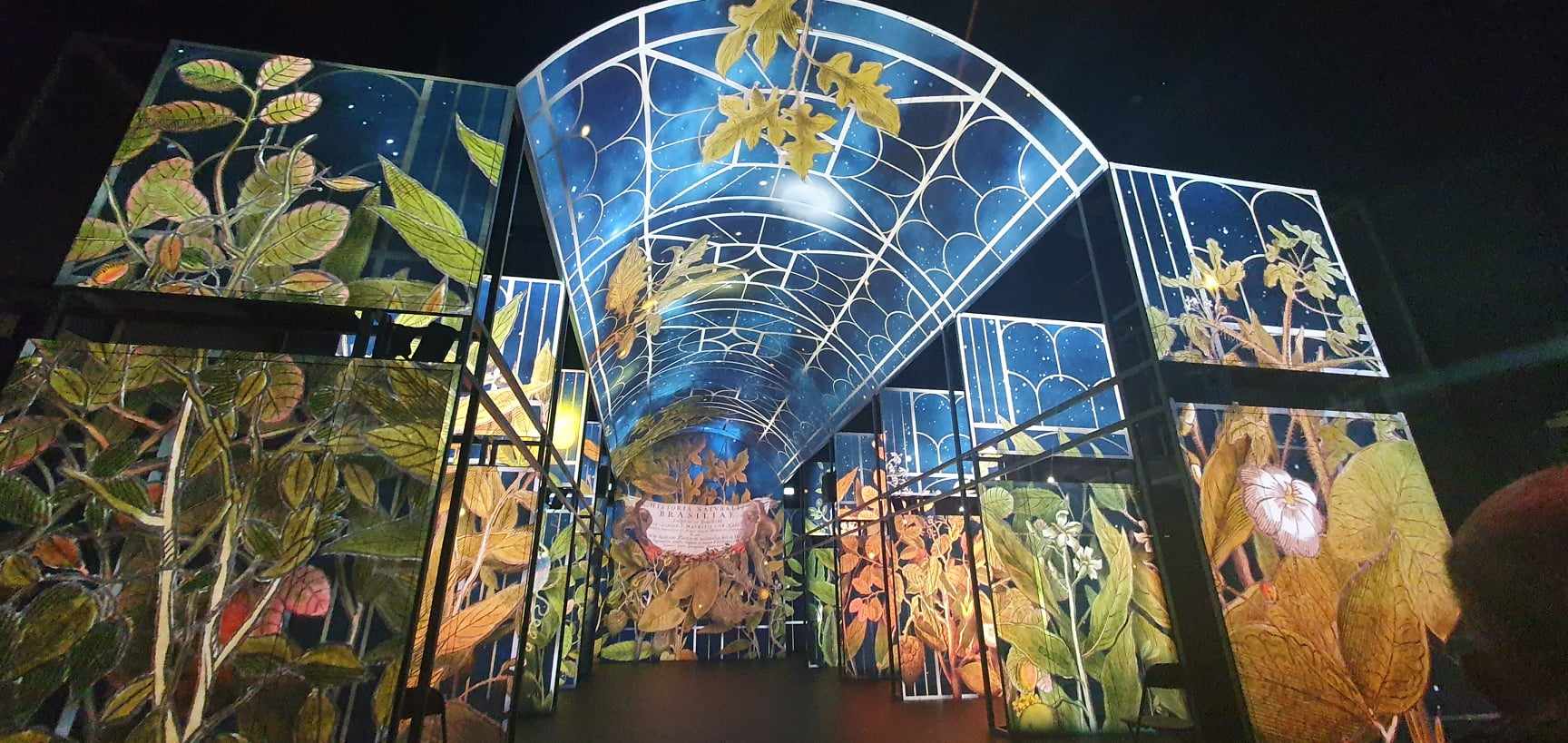

Finally, I stepped into a reimagined Long Room and see both the past and the future through breathtaking digital projections.
Time to Check In
I collected my bags from the luggage hold and returned to the student accommodation reception to check in. I was aware the student accommodation buildings had no elevators, and so I had requested a ground floor room so as not to have to lug my suitcase up several flights of stairs. I found my assigned room on the top floor, up four flights of stairs.
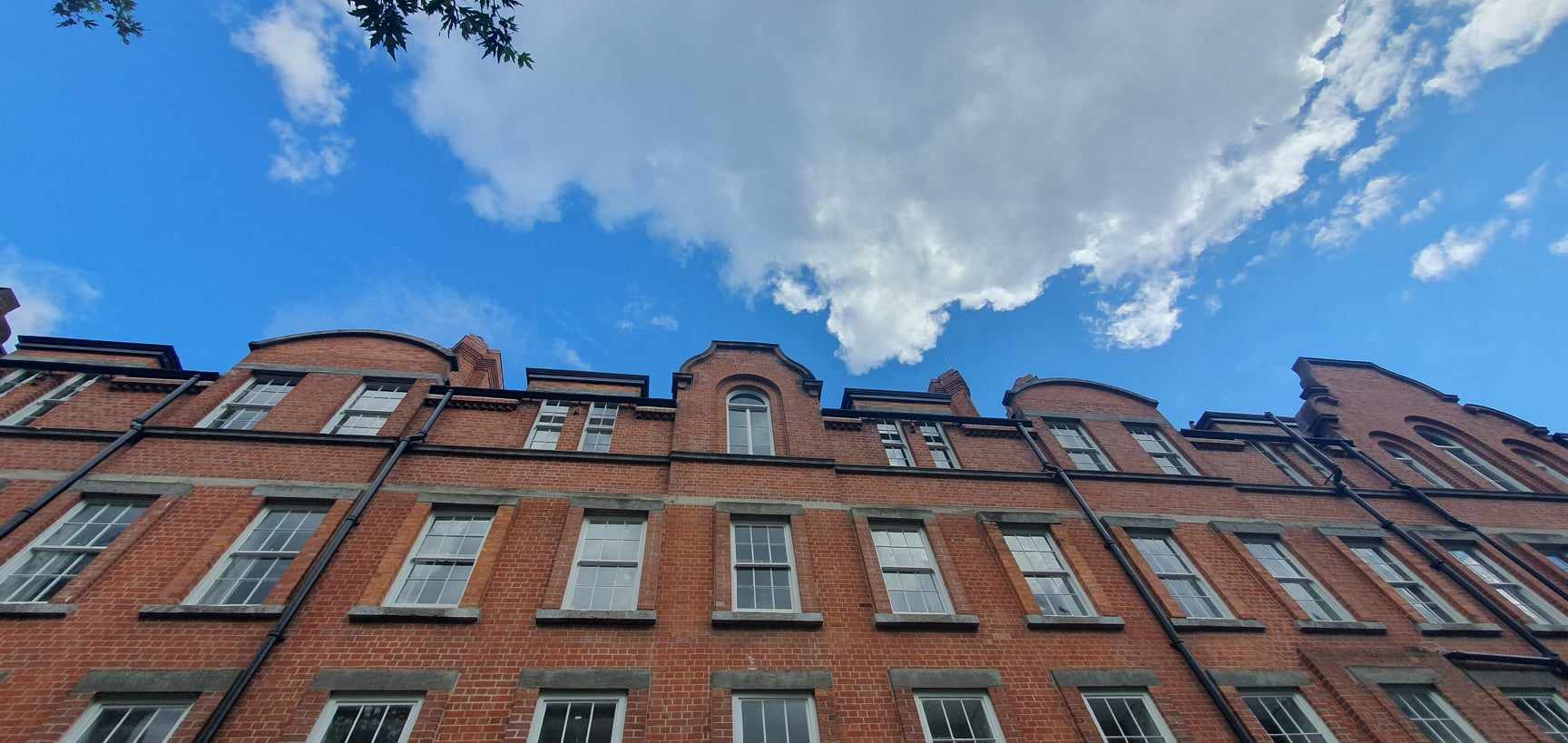
When I entered the room, I felt the deflation of disappointment. The space felt dated, and its furnishings very basic for the price I had paid, to the tune of $165AUD per night. The view from my window was the back of another building. The shared bathroom smelled of recent use.
I decided this was not satisfactory and returned to the accommodation office. I felt like Mrs. Richards from the Fawlty Towers episode ‘Communication Problems’, but I had spent a lot of money on my stay at Trinity College, and I was scared I wasn’t going to enjoy it. The staff reallocated me to a ground-floor room. I had made changes to my booking before my arrival, the ground floor request had somehow disappeared from the booking notes with the change. This new room was right next to the busy road outside, with trams clanging and pedestrian signals beeping. My view this time was of a bike shed and an unkempt courtyard.
I returned to reception again and asked to move back to my original room. They found a different room again, in a building across the courtyard away from the road. Again the room was up three flights of stairs, but this room was more spacious than the other two, and offered a nicer setting to sit and write and apply for jobs.
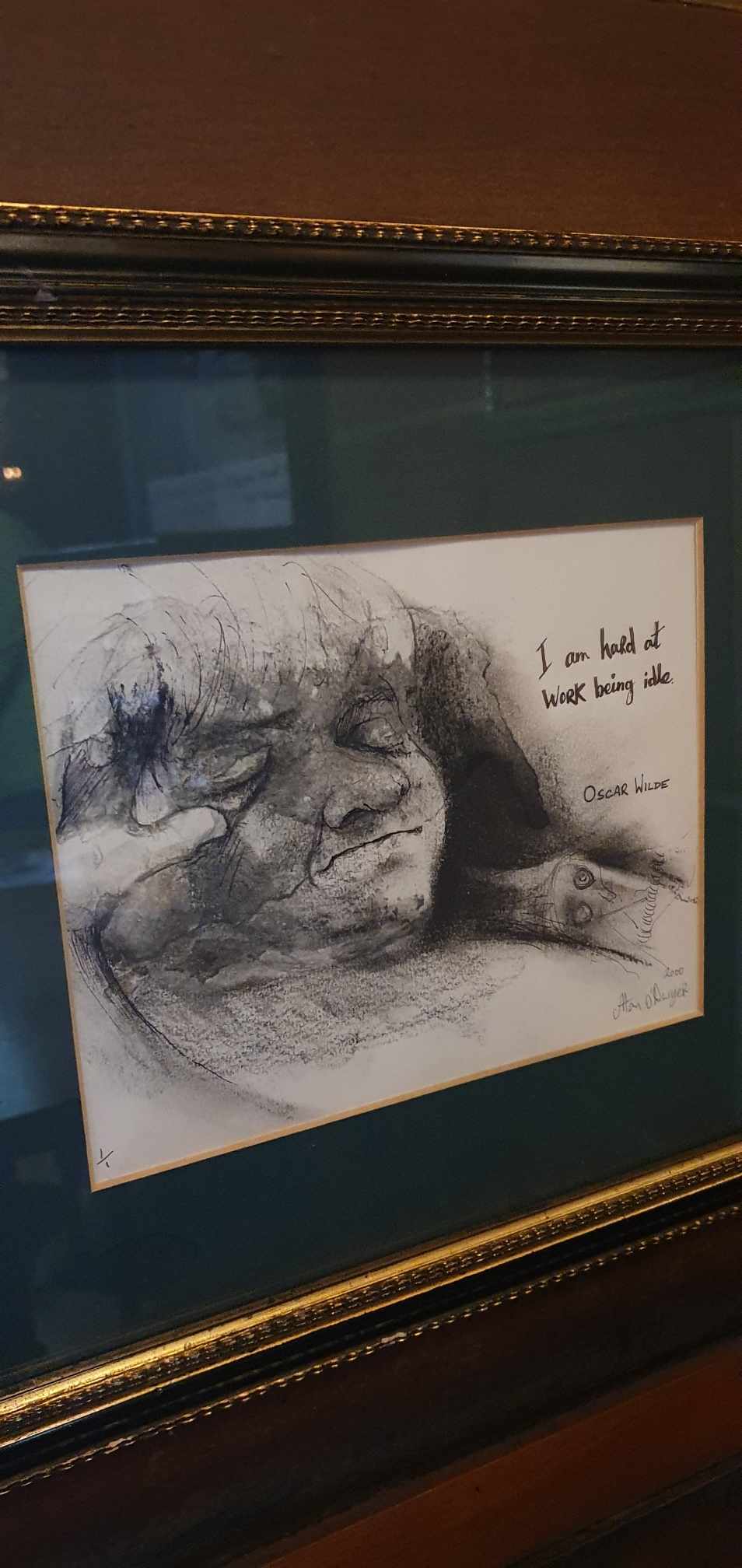
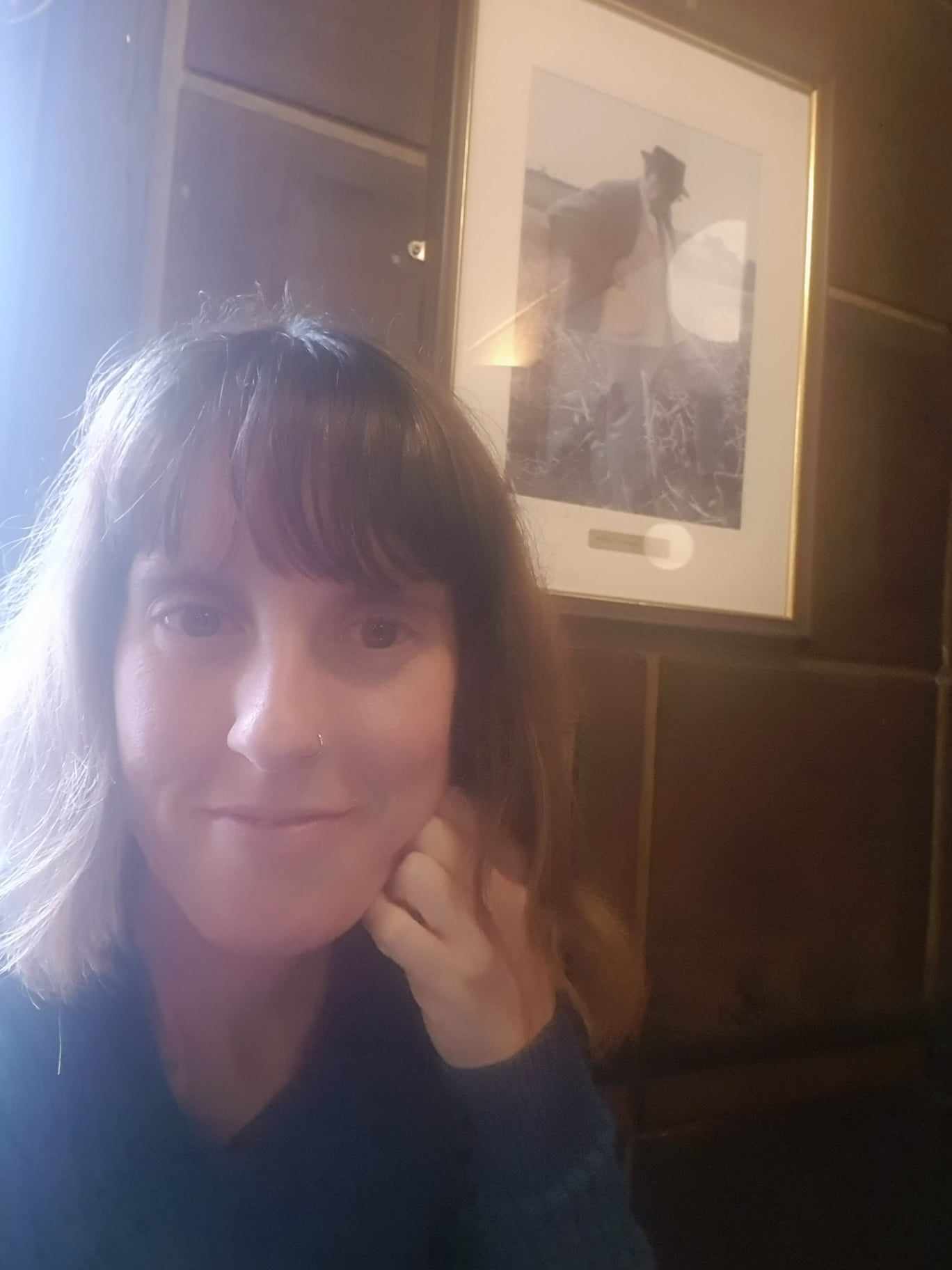
After I had settled in, I went for a late dinner to Kennedy’s, an establishment which has been a cornerstone of the city’s vibrant pub culture since 1850. Nestled in the prestigious area of Westland Row and Merrion Square, Kennedy’s is a living museum of Dublin’s rich literary and cultural heritage.

A Restless Night
At around 11pm that night, someone arrived at the student accommodation, slamming every door they came through between the entrance and their room on the top floor while making multiple trips in and out of the building. The building had a grand staircase in the middle, and the noise carried down through the levels. I could even feel the force of the slamming vibrating through the floor. I regretted moving to this building- the staircase in the building of my first room had been much more compact, and I suspected the slamming would not have echoed and shuddered so badly.
The next morning I returned to the reception and requested to move back to my first room. The building was all booked out, and I was informed that the noise level would be the same despite the different design of the buildings. I accepted defeat and returned to my room to make the most of it.
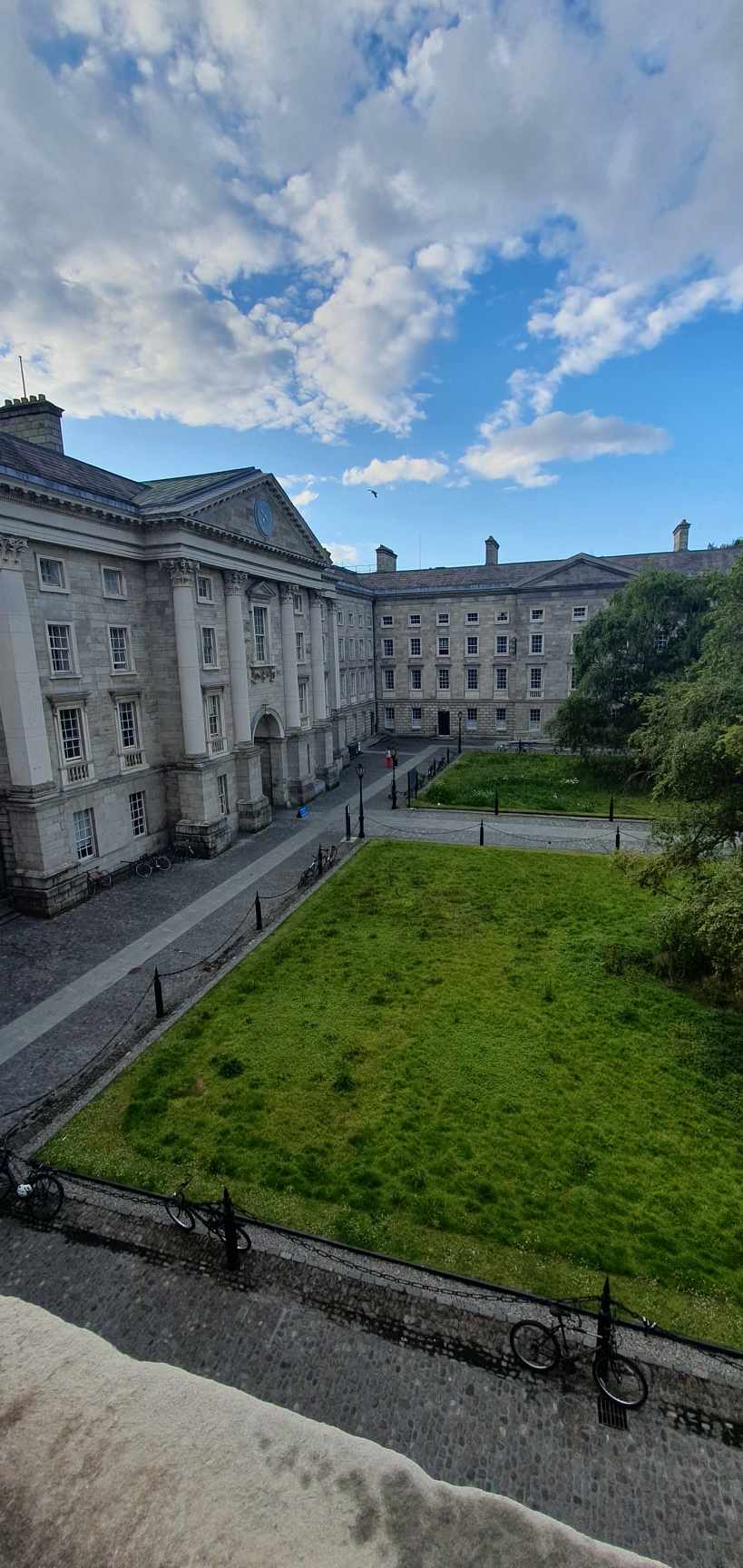
Back in my room, I sat at the desk and watched the comings and goings in the busy courtyard below. I could hear the music of the buskers playing on Grafton Street. I had been successful in the temporary customer care role at the Galway Races the following month, and so completed the online induction and also applied for another temporary role.
I tried unsuccessfully to nap in the afternoon, but although I couldn’t sleep, I still felt rested. That night, I had a group interview for a temporary role with the retail cosmetics company. I came away from it feeling that I didn’t do very well. We had been required to participate in various customer service simulations, and let’s say I’m just not a good actor under pressure. I hadn’t yet booked accommodation beyond my four nights at Trinity College- I was waiting to hear back about the result of my interview, and if I was somehow successful I would drop the Galway job and stay in Dublin for the next three months. If not, I would catch the train to Galway on Wednesday. With my job applications out of the way, I got on with some writing. I was going to make the most of this stay at Trinity, even if I couldn’t sleep.
Discover more from Kate Kelsen
Subscribe to get the latest posts sent to your email.

